

Medical Review Auschwitz
Co-financed from the state budget, by the Polish Minister of Science and Higher Education as part of Wektory Nauki (Vectors of Science) program.
Medical Review Auschwitz
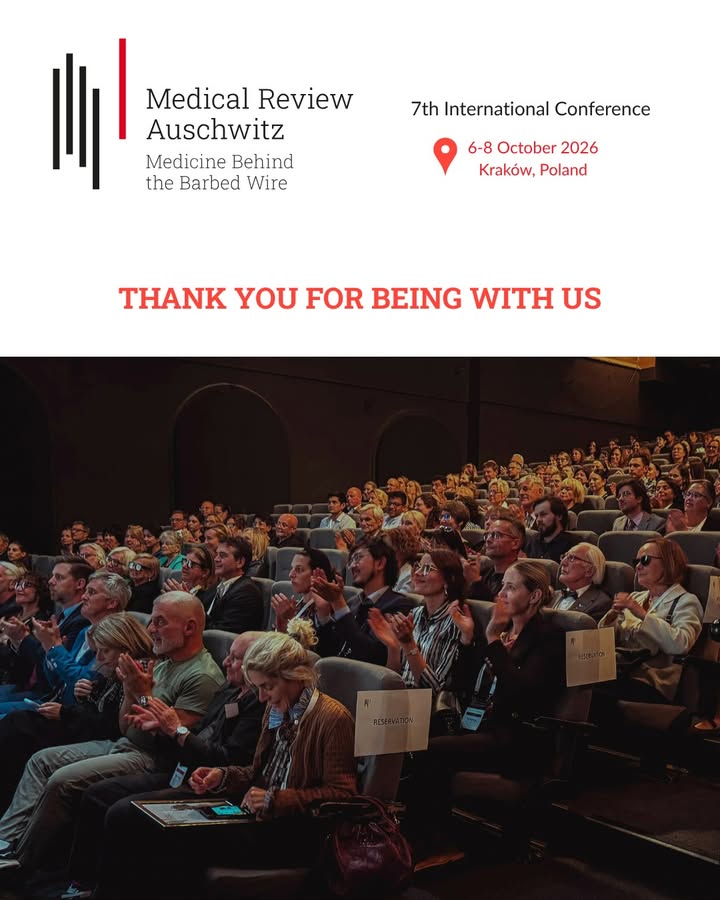
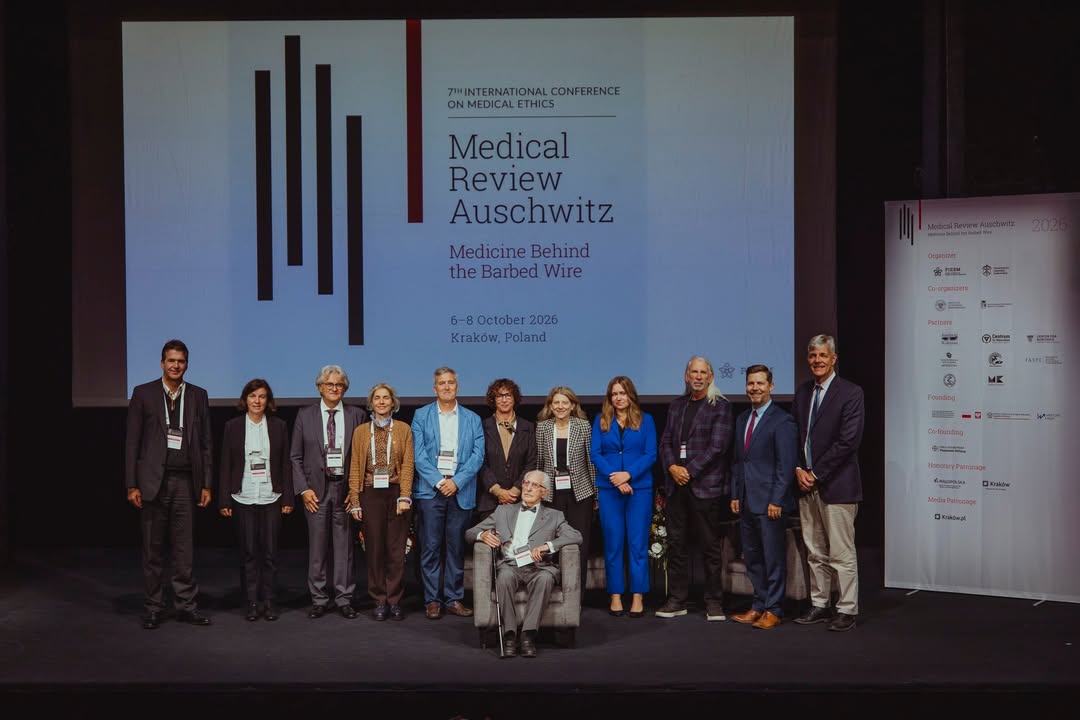
The 7th edition of Medical Review Auschwitz: Medicine Behind the Barbed Wire has come to a close.
Over three days in Kraków and at the Auschwitz-Birkenau Memorial, more than 230 participants from over 15 countries came together to reflect on the history of medical crimes during the Second World War and their enduring relevance to contemporary medicine, bioethics, and healthcare.
From a moving conversation with Holocaust survivor Dr Leon Weintraub to inspiring lectures, interdisciplinary discussions, and workshops, this year’s conference reminded us why historical memory and ethical reflection remain essential to medical practice today.
Thank you to all our speakers, participants, partners, and supporters for making this edition so meaningful.
Recordings of the lectures will be available free of charge at www.medical-auschwitz.one.
All photos © Magda Rymarz
Medical Review Auschwitz updated their cover photo.
Medical Review Auschwitz
Reflecting on the Pre-Conference Study Visit: Auschwitz-Birkenau Memorial
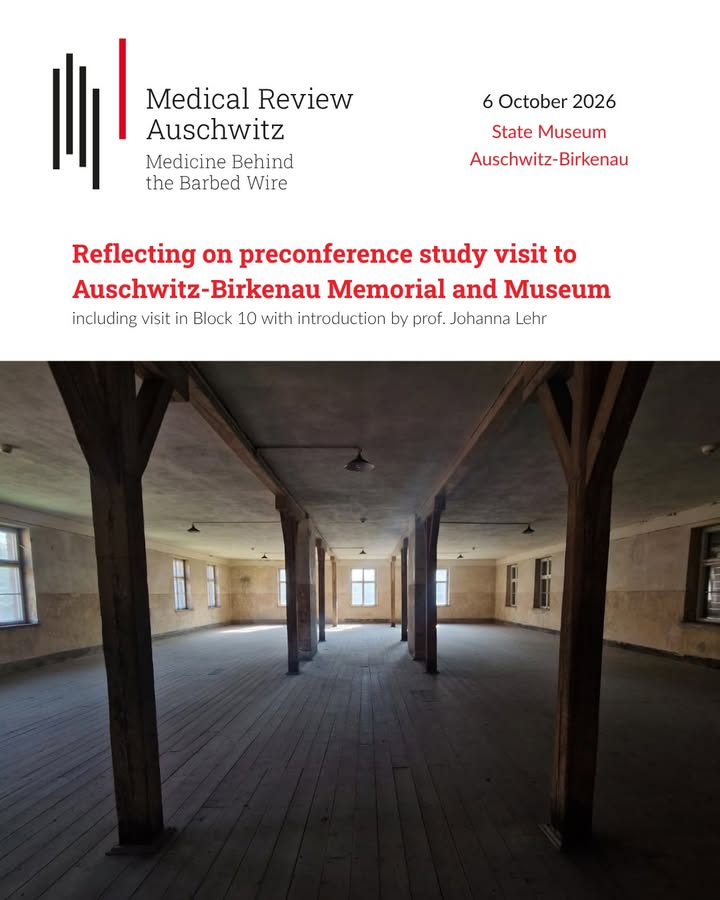
Following the first full day of the conference, participants continue to reflect on the study visit to the Auschwitz Memorial / Muzeum Auschwitz.
The visit provided important context for discussions on medical ethics and the responsibilities of healthcare professionals. At Auschwitz-Birkenau, participants were confronted with the consequences of the misuse of medical knowledge under a totalitarian regime, where medicine and science were used to support persecution rather than to care for patients.
A significant part of the visit was Block 10, where women prisoners were subjected to medical experiments. During the visit, Johanna Lehr shared the stories of French women imprisoned there. Their experiences serve as a reminder of the importance of maintaining ethical standards in medicine and research, regardless of political or social circumstances.
The visit encouraged participants to reflect on how ethical standards can be challenged in times of crisis and on the responsibility of physicians and researchers to uphold respect for human dignity, patient welfare, and professional ethics.
As the conference continues with lectures and workshops, the lessons explored at Auschwitz will remain an important point of reference. Understanding this history reinforces the importance of ethical decision-making in medicine and reminds us that medical practice and research must always be guided by respect for human dignity, patient welfare, and professional responsibility.
#MedicalEthics #MedicalEducation #AuschwitzMedicalReview
Medical Review Auschwitz
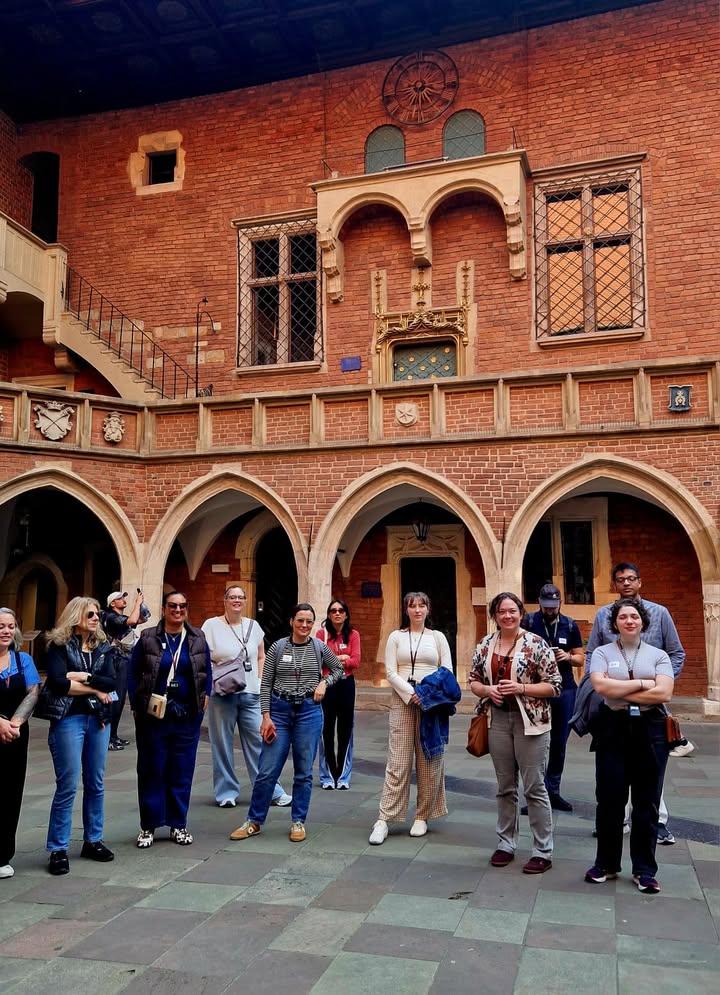
The Auschwitz: Medical Review Scholarship Program is a unique opportunity for physicians-in-training, including residents, fellows, and selected health professions students, to explore the roles and responsibilities of health professionals during the Holocaust and examine their relevance to contemporary medical practice.
During the first two days of the program, fellows explored Kraków’s Old Town to learn more about the city where Medical Review Auschwitz was born and visited Oskar Schindler’s Factory Museum, gaining historical insight into life under German occupation and the impact of World War II on the local community.
The following day, participants toured Kazimierz, Kraków’s historic Jewish Quarter, and Podgórze, the site of the former Kraków Ghetto. Through these visits, fellows were introduced to the history of Kraków’s Jewish community, the consequences of discrimination and persecution, and the experiences of individuals affected by the Holocaust.
By connecting historical sites, personal stories, and contemporary ethical questions, these visits helped prepare participants for the discussions and learning experiences that will shape the remainder of the program. They also provided an opportunity to reflect on professional responsibility, ethical decision-making, and the importance of safeguarding human dignity in healthcare.
Medical Review Auschwitz
We are proud to announce that Łukasz Smółka, Marshal of the Małopolska Region, has assumed honorary patronage of the 7th International Conference “Medical Review – Auschwitz: Medicine Behind Barbed Wire.”
We are deeply grateful to Marshal Łukasz Smółka for lending his support to this conference, which brings together historical reflection and contemporary medical ethics, fostering a deeper understanding of the responsibilities and values that underpin the medical profession.
The conference is just around the corner! There is still time to join us.
If you haven’t registered yet, we warmly encourage you to do so via our website:
🔗 mratickets.piebm.org/register
We look forward to welcoming you!
Medical Review Auschwitz
We are honoured to announce that the Mayor of the City of Kraków has assumed honorary patronage of the 7th International Conference “Medical Review – Auschwitz: Medicine Behind Barbed Wire.”
As the birthplace of the Medical Review Auschwitz project, Kraków holds a unique place in its history. The city’s longstanding academic and intellectual traditions provide a meaningful foundation for our work, which connects the study of the past with ongoing discussions on medical ethics and professional responsibility. The Mayor’s patronage underscores the enduring relevance of this mission.
“Medical Review – Auschwitz: Medicine Behind Barbed Wire” is an annual international conference that explores the history of medicine during the Second World War and its lasting significance for medical ethics and practice. By engaging with these historical experiences, the conference encourages reflection on the ethical challenges facing medicine today and the enduring responsibilities of healthcare professionals.
We are grateful to the Mayor of Kraków for this gesture of support and for joining us in promoting the values at the heart of our conference.
Medical Review Auschwitz is attending an event.
Final Day Workshops
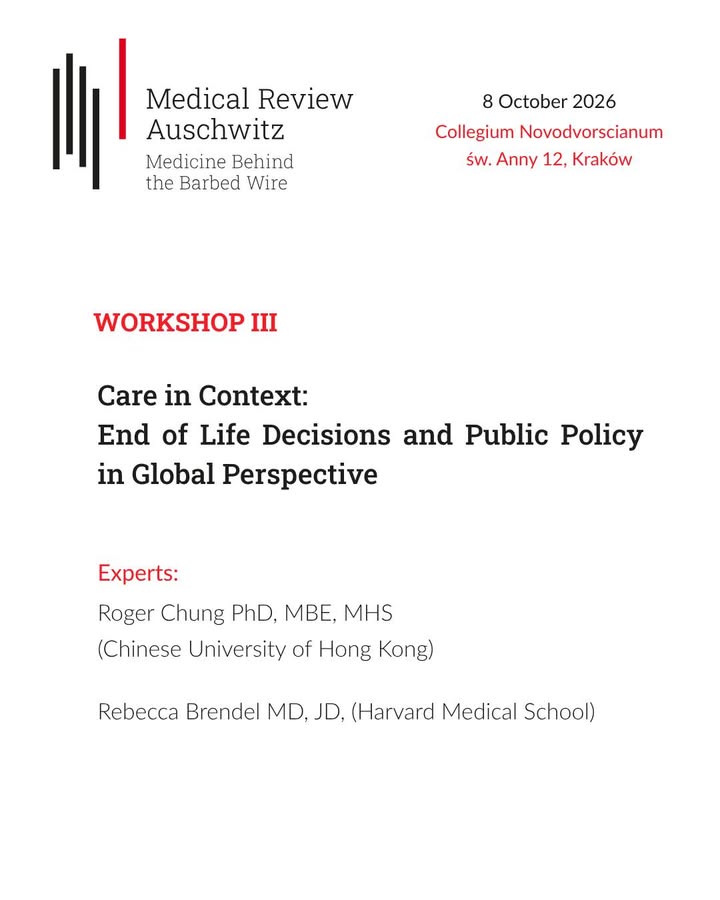
Our third and final workshop will be led by scholars Roger Chung and Rebecca Brendel.
It will offer participants an opportunity to examine voluntary assisted dying (commonly known as voluntary euthanasia) and consider whether, and to what extent, echoes of the Nazi T4 program can be discerned in contemporary thought and practice, and what lessons may be drawn from these parallels.
“Care in Context: End-of-Life Decisions and Public Policy in Global Perspective”
Experts:
Roger Chung, PhD, MBE, MHS, Chinese University of Hong Kong
Rebecca Brendel, MD, JD, Harvard Medical School
As we are increasingly able to prolong life, physicians, patients, and caregivers around the world are grappling with clinical, ethical, and legal questions surrounding decision-making at the end of life. This workshop will highlight the example of evolving developments in Hong Kong, the US, and beyond as lenses to explore the continuum of considerations from decision-making about withdrawing and withholding care to the contours and context of medically-assisted death and euthanasia. Critical ethical considerations about when, if ever, physician participation in causing death ought to be permissible/ available will be explored in the context of concerns regarding human and social implications of various practices
We encourage all conference participants—and those newly interested—to attend this workshop as part of a shared commitment to historical accountability and professional reflection.
*Limited number of participants
Register: www.medical-auschwitz.one
#MRA #MedicalReviewAuschwitz #MedicalEthics
Medical Review Auschwitz
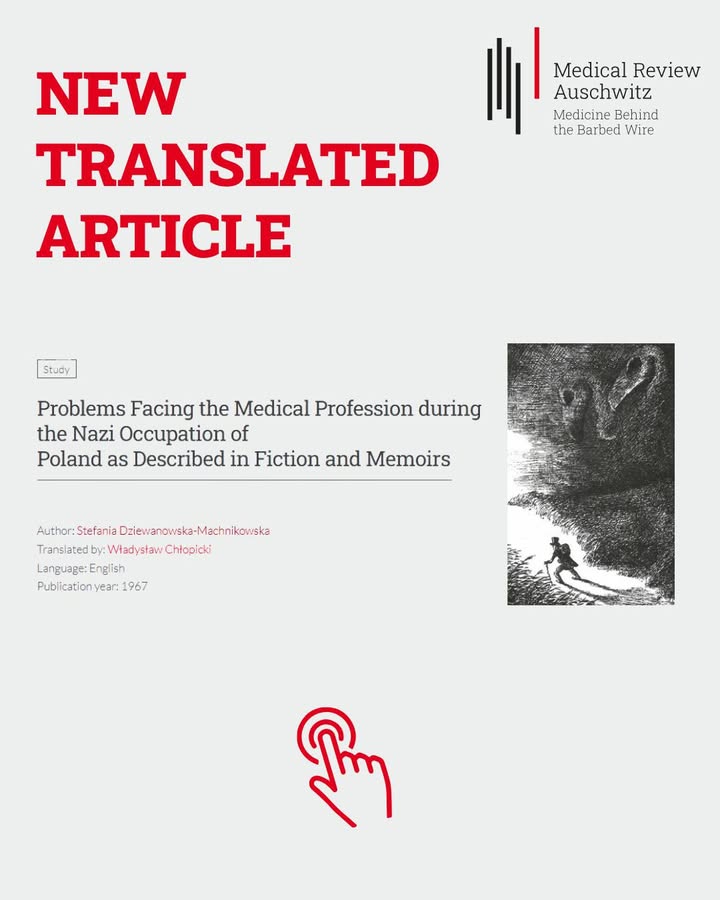
What did it mean to be a doctor under occupation?
In occupied Poland, the everyday reality of medical practice was transformed by persecution, shortages, restrictions and an uncertain future.
But how did physicians experience this reality — and how was it reflected in the literature and memoirs of the time?
Our latest publication brings an English translation of "Problems Facing the Medical Profession During the Nazi Occupation of Poland as Described in Fiction and Memoirs".
A new article, a different perspective on medicine under occupation — now available to read in English and open access.
Read the new MRA Translation article: mra.piebm.org/library/problems-facing-the-medical-profession-during-the-nazi-occupation-of-poland-as-described-in-fiction-and-memoirs/
#MedicalReviewAuschwitz #MRATranslation #MedicalHistory #HistoryOfMedicine
Medical Review Auschwitz
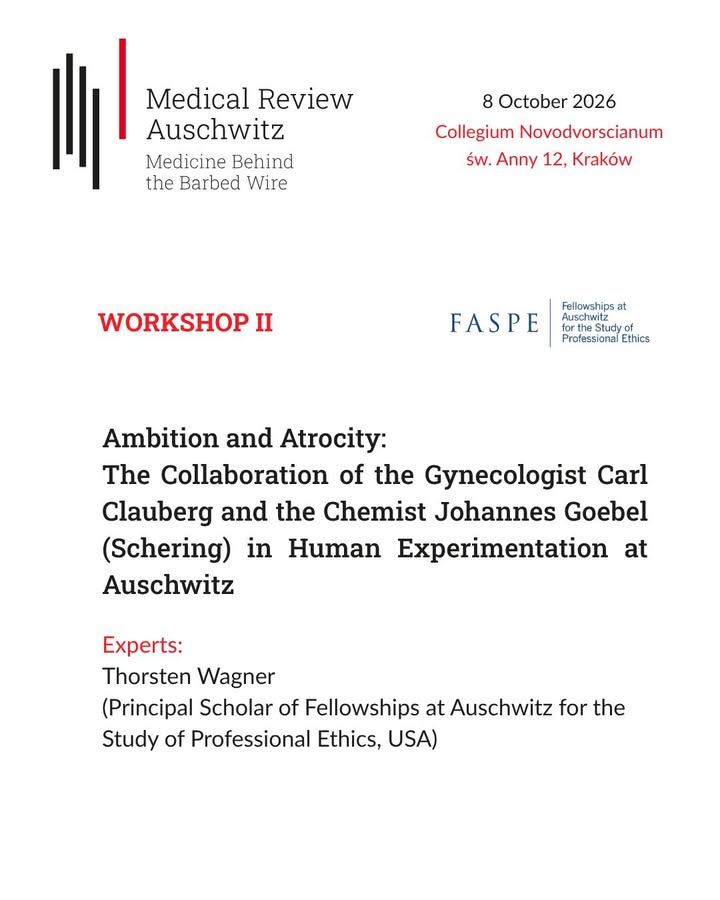
Final Day Workshops
Our second of concluding workshops lead by the Principal Scholar of FASPE will offer an opportunity for participants to investigate how seemingly ordinary decisions and career ambitions can converge to enable atrocities, and how to recognize these risks today.
"Ambition and Atrocity: The Collaboration of the Gynecologist Carl Clauberg and the Chemist Johannes Goebel (Schering) in Human Experimentation at Auschwitz”
Expert: Thorsten Wagner
Fellowships at Auschwitz for the Study of Professional Ethics, USA
The workshop will explore various paths leading to Auschwitz. Block 10 became the point of convergence for very different professional careers. The medical crimes committed at the camp provide a lens, a window into various forms of historical complicity – medical, professional, corporate – and their contemporary implications for professional ethics today. We will look at individual career choices and organizational dynamics and explore how the transformation of moral norms and the momentum of surprisingly quotidian, ordinary motives can converge and lead to previously unimaginable crimes overseen by professionals. What does these dynamics mean for us today?"
We encourage all conference participants—and those newly interested—to attend this workshop as part of a shared commitment to historical accountability and professional reflection.
*Limited number of participants
Register: www.medical-auschwitz.one
#MRA #MedicalReviewAuschwitz #MedicalEthics
Medical Review Auschwitz
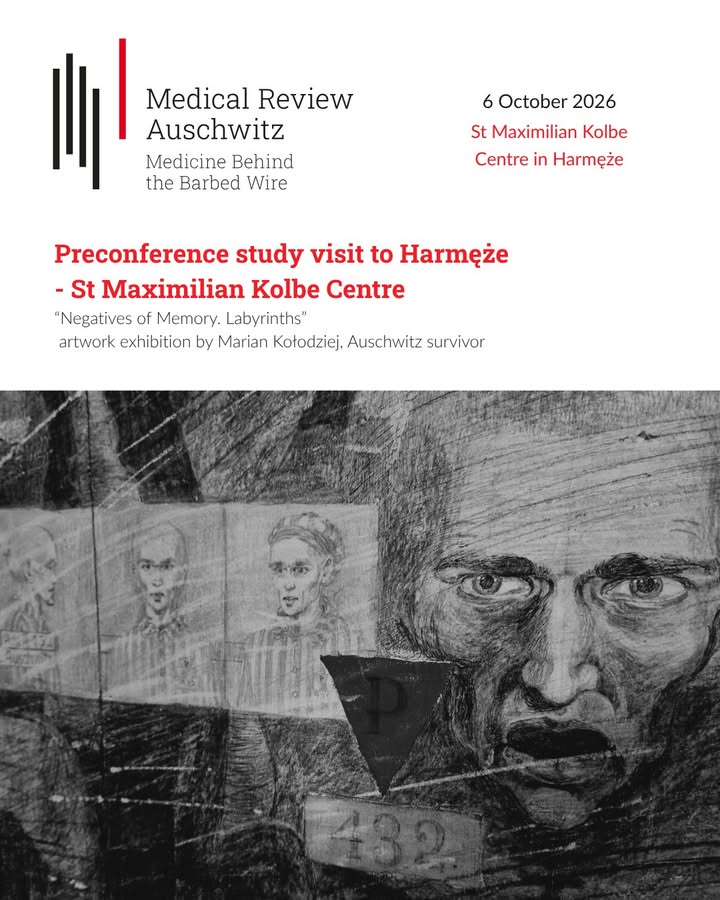
"A look at Auschwitz through drawing. Anyone who has been to Auschwitz and survived Auschwitz has been left for life with the inalienable stigma of the human tragedy unfolding there. I would like to hint the viewer to be patient and patiently read everything that is written in these drawings. These are my 'drawn words' to you. They must be read."
— Marian Kołodziej
The next part of the preconference study visit leads participants from Auschwitz Memorial / Muzeum Auschwitz to the exhibition “Negatives of Memory. Labyrinths” by Marian Kołodziej, located at the Centrum św. Maksymiliana w Harmężach
Created by a former Auschwitz prisoner and artist, this powerful visual narrative goes far beyond documentation. Through haunting imagery and metaphor, Kołodziej shares his inner world shaped by trauma, silence, and survival.
You can still join our group.
Details and registration: www.medical-auschwitz.one
#MedicalReviewAuschwitz #MedicalEthics #MRA #HolocaustEducation
Medical Review Auschwitz
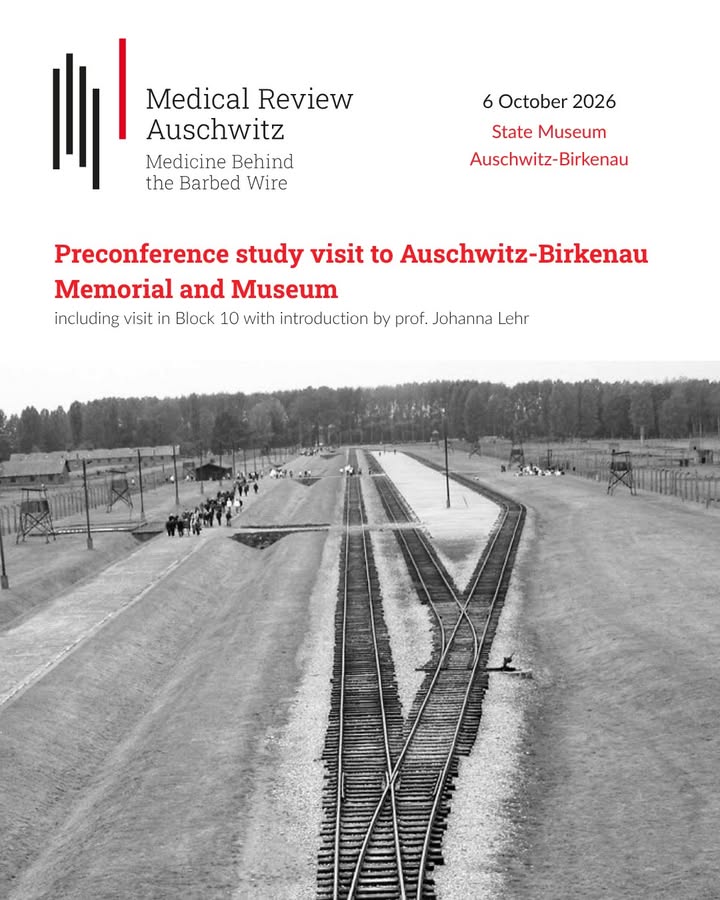
Before the first lecture is delivered, before the first discussion begins, participants will enter the place where the history at the heart of this conference unfolded.
On the first day of the conference, the Auschwitz Memorial / Muzeum Auschwitz will once again welcome an international group of doctors and medical students participating in the 7th International Conference Medical Review Auschwitz: Medicine Behind Barbed Wire.
The visit includes Block 10, offering participants a rare and unique opportunity to enter one of the most historically significant sites within Auschwitz. Because of its exceptional historical importance and preservation requirements, this original block is not normally open to visitors. Block 10 was the site of brutal medical experiments conducted on women prisoners, and access to this authentic space provides an invaluable opportunity for reflection and learning.
Moreover, the study tour will be accompanied by an introduction by Johanna Lehr, a French historian whose current research focuses on the trajectories of women deported from France who were imprisoned in this block.
Time we are going to spend in Auschwitz is not simply an accompanying event. It is a fundamental part of the conference experience, providing the historical, ethical, and human context for all the discussions that follow. Standing in the spaces where medicine was distorted into a tool of persecution and suffering allows participants to engage more deeply with questions of medical ethics, professional responsibility, and the lasting consequences of the abuse of science and medicine.
It is a moment of confrontation with history that prepares participants for the days ahead, grounding the conference conversations in the reality of the people whose experiences continue to challenge and inform medical practice today.
You can still join our group.
Details and registration: www.medical-auschwitz.one
#MedicalReviewAuschwitz #MedicalEthics #MRA
fot. PIEBM
Medical Review Auschwitz is attending an event.
Final Day Workshops – Registration still open *
This year we invite you to participate in three workshops lead by specialists.
First of concluding workshops offer an opportunity for participants to familiarize themselves with the genetic identification process used at the Institute of National Remembrance (IPN)
"Exploring the potential of search and identification work for war victims inside the Office of Search and Identification of the Institute of National Remembrance"
Experts: Aleksandra Baryła, Angelika Słodka
Instytut Pamięci Narodowej
Institute of National Remembrance – Office of Search and Identification, Poland
This session introduces the work of a multidisciplinary team—historians, archaeologists, forensic experts, and geneticists—who investigate burial sites of victims of totalitarian repression (1917–1990). Operating across Poland and abroad, the Office of Search and Identification aims to restore public memory and dignity to those erased by communist regimes.
We encourage all conference participants—and those newly interested—to attend this workshop as part of a shared commitment to historical accountability and professional reflection.
*Limited number of participants
Register: www.medical-auschwitz.one
#MRA #MedicalReviewAuschwitz #MedicalEthics #IPN
Medical Review Auschwitz is attending an event.
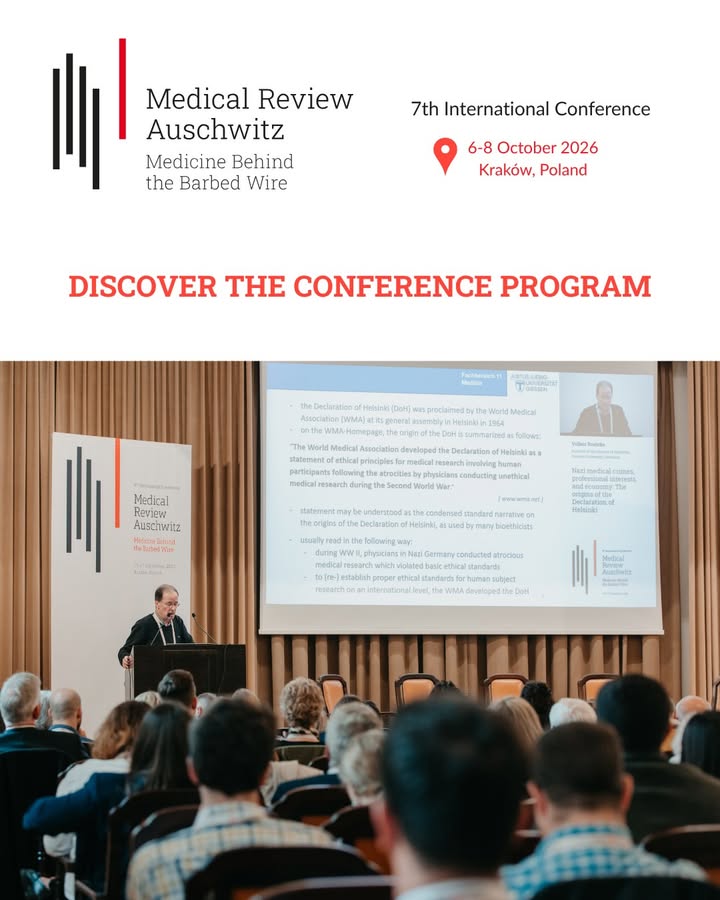
In just one month, experts, educators, healthcare professionals, and students will try to examine some of the most challenging questions in the history of medicine and their continuing relevance today.
This year's programme explores how physicians became perpetrators, how medical ethics were subordinated to ideology, and what lessons contemporary healthcare can draw from these failures.
Sessions will address topics including whether science could save lives in Auschwitz, how healers became killers, the role of physicians in the path to genocide and the persecution of women imprisoned in Block 10 and much more.
Among this year's speakers is Richard K. Lowy, author of Kalman & Leopold: Surviving Mengele's Auschwitz.
Drawing on his family's history, he will reflect on the experiences of his father Leopold and his father’s twin sister who survived Josef Mengele's experiments at Auschwitz and his friend Kalman.
His contribution offers a rare and deeply personal perspective on the enduring consequences of these crimes, and on the importance of preserving individual stories within the broader history of the Holocaust.
Together with our Guest of Honor, Dr. Leon Weintraub, and speakers from leading institutions, participants will be invited to reflect on the enduring connections between medicine, ethics, history, and human responsibility.
Join us in Kraków.
Explore the programme and register today.
#MedicalReviewAuschwitz #MedicalEthics #MRA #HolocaustEducation
Medical Review Auschwitz
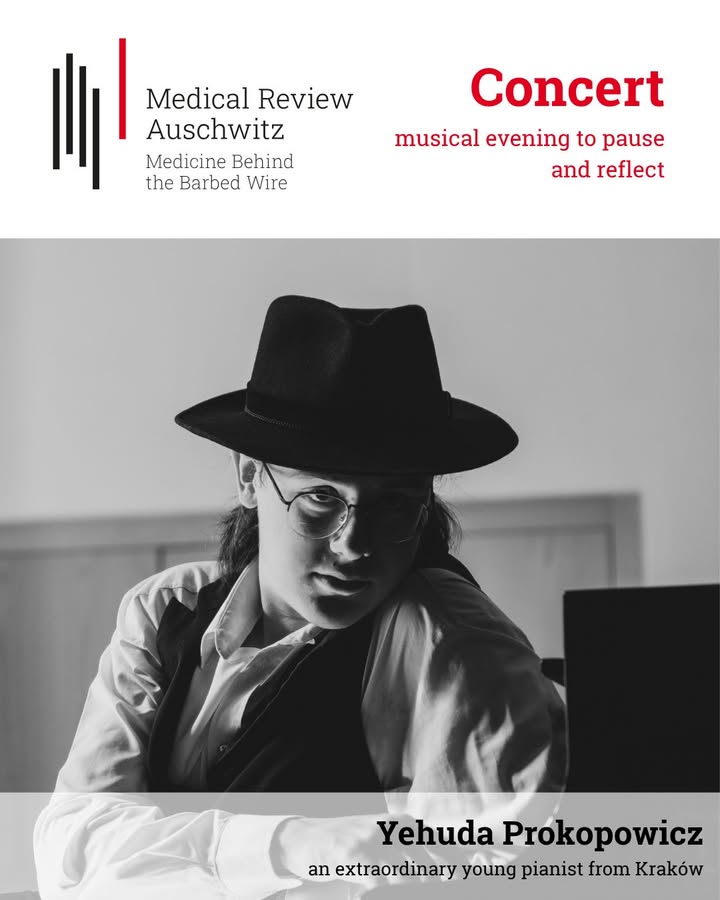
Some stories are told through words. Others are told through music.
During this year's Medicine Behind the Barbed Wire conference, we will have the privilege of experiencing a very special musical event.
Piano recital by a young and exceptionally talented pianist from Kraków, Yehuda Prokopowicz, a semifinalist of the 19th International Fryderyk Chopin Piano Competition in Warsaw, where he also received the Special Prize for the Best Performance of Mazurkas.
The concert programme brings together two distinct musical worlds – the classical clarity and elegance of Wolfgang Amadeus Mozart’s music and the Romantic language of Fryderyk Chopin.
When?
Wednesday, October 7, 2025 (7:00 PM)
Where?
Helena Modrzejewska National Stary Theatre in Kraków, Jagiellońska 1
All conference participants are invited to this special concert. Tickets will be available at the conference office on the day of the lectures.
Yehuda Prokopowicz received his musical education at the city’s renowned music schools, making this performance a particularly fitting celebration of both a remarkable young artist and the city that has shaped his musical journey.
We are delighted to welcome such an extraordinary young artist to our programme and look forward to sharing this special evening with our conference participants.
#MedicineBehindTheBarbedWire #MedicalReviewAuschwitz #MRA #MusicAndMemory #ClassicalMusic #Krakow #MedicalHumanities
Medical Review Auschwitz
They devoted years to studying the psychological trauma of Auschwitz survivors. But they also asked another, equally difficult question: what was happening in the mind of one of the perpetrators?
Antoni Kępiński and Maria Orwid were among the pioneers of research into the psychological consequences of surviving Nazi concentration camps.
In the late 1950s, Maria Orwid joined Kępiński's team. Together, they helped develop a pioneering research programme exploring the psychological effects of camp experiences among former prisoners of Auschwitz-Birkenau. Their work was among the first systematic studies in the world to examine what became known as the KZ Syndrome, the long-term trauma experienced by concentration camp survivors.
But Kępiński and Orwid did not focus solely on the victims.
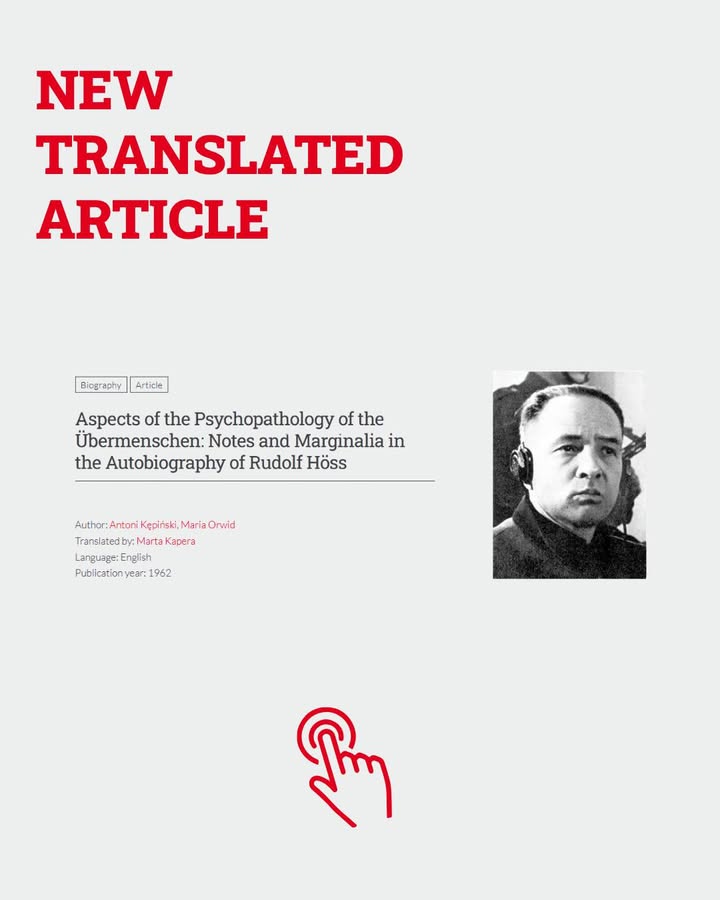
In "Aspects of the Psychopathology of the Übermenschen: Notes and Marginalia in the Autobiography of Rudolf Höss", they turn their attention to the psychology of the former commandant of Auschwitz and to a question that remains deeply unsettling:
How does a person become capable of carrying out unimaginable crimes?
The article, originally published in 1962, explores the mechanisms of blind obedience, submission to authority and the gradual erosion of individual responsibility.
The English translation of the article has just been published as part of the MRA TRANSLATION project.
Read it here: mra.piebm.org/library/aspects-of-the-psychopathology-of-the-ubermenschen-notes-and-marginalia-in-the-autobiography-of-rudolf-hoss/
This wouldn't be possible without the generous assistance from the Claims Conference (Conference on Jewish Material Claims Against Germany) and supported by the German Federal Ministry of Finance, whose commitment enables us to continue this initiative. We are truly grateful for their partnership and trust.
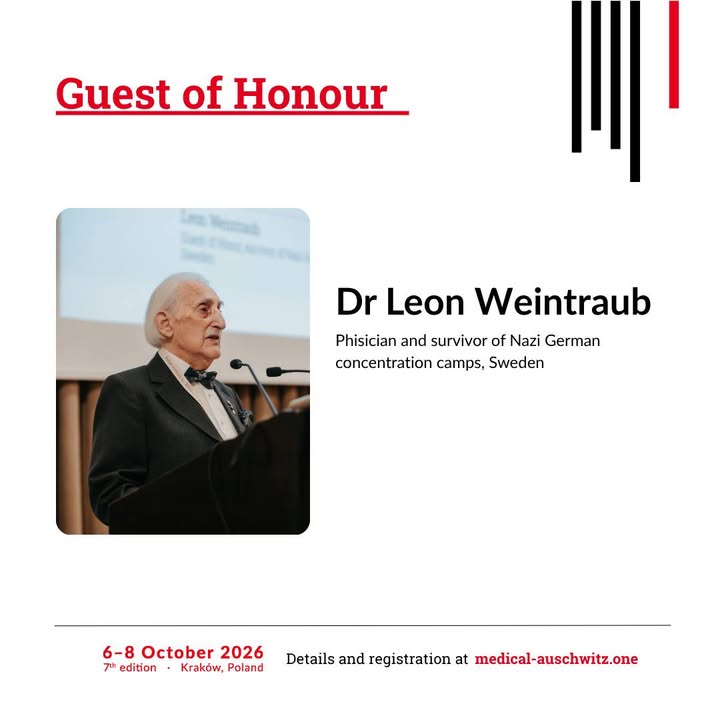
Medical Review Auschwitz
Guest of Honor Dr Leon Weintraub
This year, we are deeply honored to welcome Dr. Leon Weintraub for the second year in a row during the conferenceMedical Review Auschwitz Conference: Medicine Behind the Barbed Wire.
Through his remarkable personal testimony, he continues to remind us of the importance of the ethical responsibilities of medicine.
Born in Łódź, Poland, in 1926, Dr. Leon Weintraub survived the Łódź Ghetto, Auschwitz-Birkenau, and multiple concentration camps. After the war, he became a physician and researcher, earning his PhD in 1966.
As a reaction to the growing anti-Semitism in Poland, Leon Weintraub lost his job as a senior physician at the hospital in Otwock and emigrated with his family to neutral Sweden in the September 1969.
He dedicated his life to speaking out against hatred and the perversion of medical ethics under Nazi rule.
At 100, he remains a powerful voice for remembrance and the defense of human dignity
Learn more about Dr. Leon Weintraub from his Keynote speech during last year’s conference:
mra.piebm.org/library/keynote-speech-cogito-ergo-sum-descartes/
📝 Full Program & Registration: www.medical-auschwitz.one
#LeonWeintraub #MedicalReviewAuschwitz #MedicalEthics #MRA #HolocaustEducation
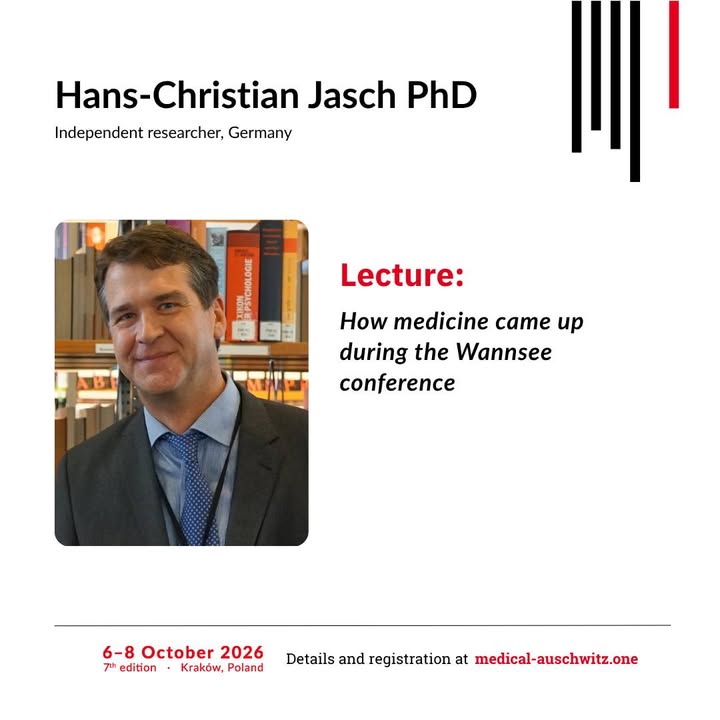
Medical Review Auschwitz is attending an event.
📣Meet our speaker!
Dr. iur. Hans-Christian Jasch is a lawyer and legal historian by training.
He holds a PhD in legal history from the Humboldt University in Berlin.
He was appointed as director of the Memorial and Educational Site House of the Wannsee Conference in May 2014 following the publication of his critically acclaimed book in 2012 on the Nazi-state-secretary Wilhelm Stuckart, who represented the Ministry of interior at the Wannsee Conference.
Before starting his assignment as director of the Wannsee Memorial and parallel to his academic research on law and public administration in Nazi-Germany, Dr. Jasch worked as a lawyer in the public administration for the German Federal Ministry of Interior in the field of countering right-wing extremist hate crime and terrorism (2012-2014) and as a seconded national expert on preventing violent radicalisation for the counter-terrorism unit of the European Commission in DG Home Affairs from 2007 to 2011.
In 2016/17 he co- authored books on the Participants of the Wannsee-Conference, the Nuremberg Laws, Public administration and the Holocaust, a book on how the German Justice system dealt with Holocaust crimes after 1945, a book on amateur war-fotography during the German attack on Poland and now an exhibition and a catalogue called: “Crimes Uncovered” on “The First Generation of Holocaust Researchers”.
Since August 2020 he works in Federal Ministry of Interior in the field of public security.
🌐Check the full program at: www.medical-auschwitz.one/conference/program
✅Register at medical-auschwitz.one/conference/registration
#MedicalReviewAuschwitz #MedicalEthics #MRA #HolocaustEducation
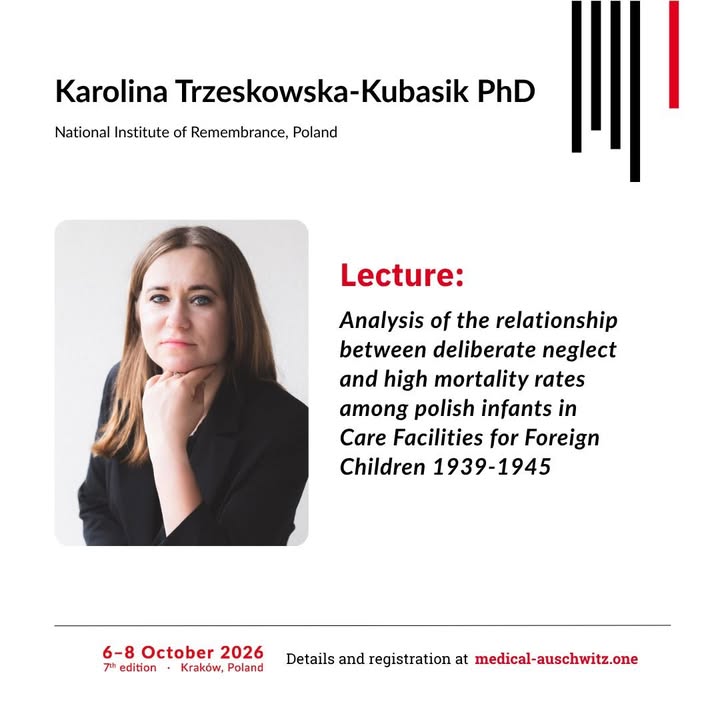
Medical Review Auschwitz
📣Meet our speaker!
Dr Karolina Trzeskowska-Kubasik is a historian at the Historical Research Office of the Institute of National Remembrance (IPN) in Warsaw and a member of the research project Occupational Terror on Polish Lands, 1939–1945.
She holds a PhD in the Humanities and graduated from the Faculty of History at the Pedagogical University of Cracow. Between 2014 and 2019, she was a researcher at the Polish Underground Movement Study Trust in London.
She is the author of seven books, co-editor of several academic monographs, and has published widely in both scholarly and popular history journals in Poland and abroad. She serves on the editorial board of the academic journal Remembrance and Justice and is a member of the Your Roots in Poland Association.
Her research focuses on German occupation policies in the Radom District during the Second World War (1939-1945), with particular emphasis on Nazi terror and the fate of the children of Polish forced labourers.
🌐Check the full program at: www.medical-auschwitz.one/conference/program
✅Register at medical-auschwitz.one/conference/registration
#MedicalReviewAuschwitz #MedicalEthics #MRA #HolocaustEducation
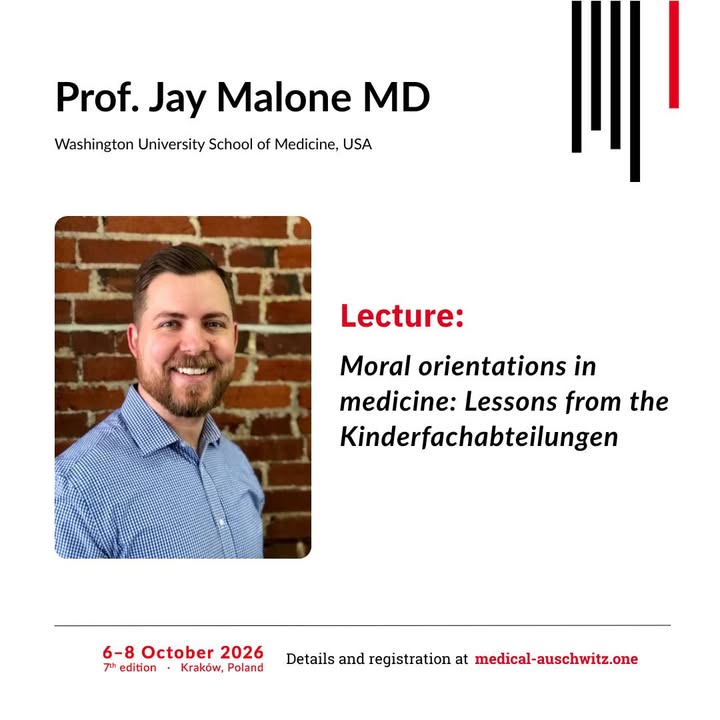
Medical Review Auschwitz is attending an event.
📣 Meet our speaker!
Jay R. Malone, MD, PhD is a pediatric critical care physician and clinical ethicist at St. Louis Children’s Hospital and Washington University School of Medicine, where he is currently the Medical Director of Ethics and chair of the medical ethics committee. He received his Ph.D. in Health Care Ethics at St. Louis University. His dissertation focused on the impact of invasive medical technologies on the suffering of children and families. Dr. Malone’s ongoing research focuses on the role of suffering in pediatric critical illness, and the impact of emotion on family communication around the dying process. He is also a medical faculty member with the Fellowships at Auschwitz for the Study of Professional Ethics.
🌐Check the full program at: www.medical-auschwitz.one/conference/program
✅Register at medical-auschwitz.one/conference/registration
#MedicalReviewAuschwitz #MedicalEthics #MRA #HolocaustEducation
Medical Review Auschwitz is attending an event.
📣Meet our Speaker!
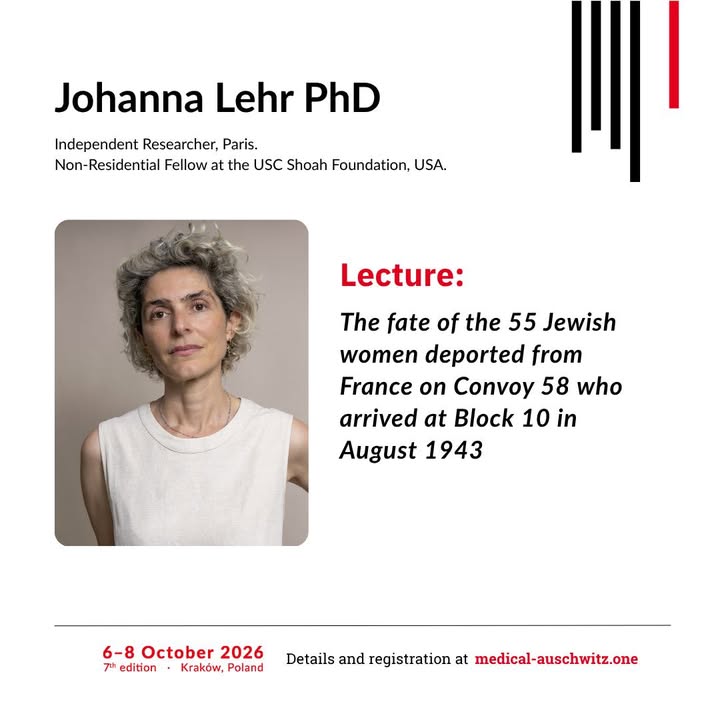
Johanna Lehr – French historian specializing in the history of anti-Jewish persecution in France during the Second World War and a clinical psychologist. She holds degrees in political science from Paris 1 Panthéon-Sorbonne University and in clinical psychology from Paris Diderot University (Paris 7).
Since 2018, her postdoctoral research has focused on the daily lives of Jews in occupied Paris, exploring topics such as imprisonment, welfare, funeral societies, women’s experiences, and the mechanisms of individual arrests under German occupation and the Vichy regime.
Her award-winning book, Au nom de la loi. La persécution quotidienne des Juifs à Paris sous l’Occupation (2024), examines the everyday implementation of anti-Jewish persecution in occupied Paris. Her current research focuses on Block 10 at Auschwitz, particularly on the trajectories of women deported from France who were imprisoned there, examining their experiences, survival strategies, and postwar trajectories, as presented in the recently published book, Auschwitz, une histoire de femmes. Les Françaises du bloc 10.
🌐Check the full program at: www.medical-auschwitz.one/conference/program
✅Register at medical-auschwitz.one/conference/registration
#MedicalReviewAuschwitz #MedicalEthics #MRA #HolocaustEducation
Medical Review Auschwitz
📣Meet our Speaker!
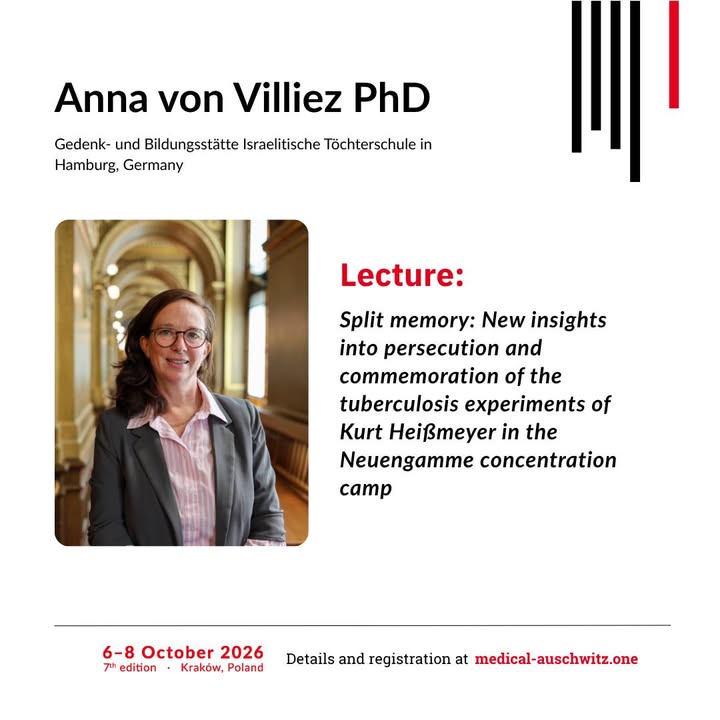
Anna von Villiez, the director of the Memorial Israelitische Töchterschule in Hamburg, Germany. She also serves as the City of Hamburg’s Commissioner for Jewish Life and the Combating and Prevention of Antisemitism. She received her PhD in history at Hamburg University and has worked as a researcher at Oxford Brookes University. Her research interests include the history of medicine in Germany, especially Jews in medicine and gender history of medicine as well as public history.
Her book “Mit aller Macht verdrängt. Entrechtung und Verdrängung ‚nicht arischer‘ Ärzte in Hamburg“, Dölling & Galitz 2009, was the first study on the persecution and disenfranchisement of Jewish physicians in Hamburg. She is currently involved in a research project on the anatomical institute of Hamburg under National Socialism looking.
🌐Check the full program at: www.medical-auschwitz.one/conference/program
✅Register at medical-auschwitz.one/conference/registration
#MedicalReviewAuschwitz #MedicalEthics #MRA #HolocaustEducation
Medical Review Auschwitz
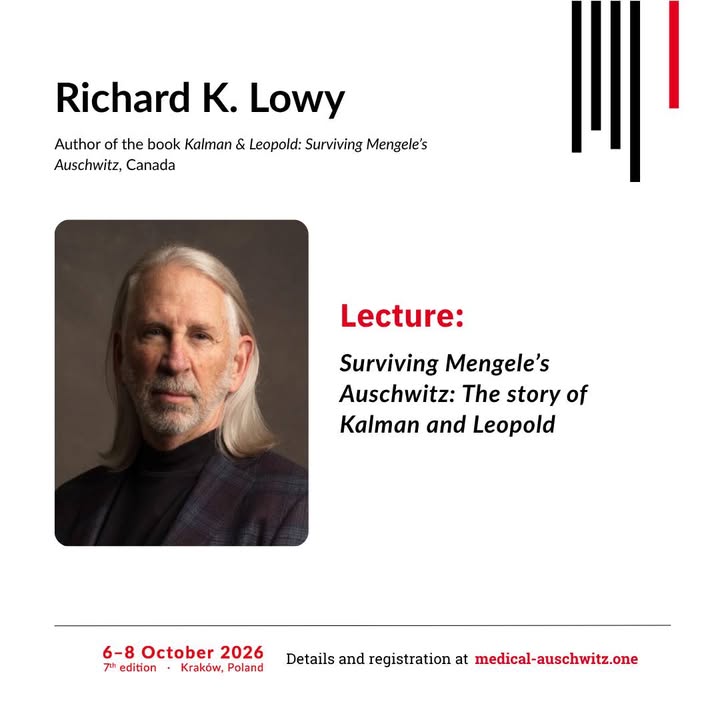
Meet Richard K. Lowy is an award-winning author, documentary producer, and internationally recognized creative director. For more than three decades, he produced major events around the world featuring heads of state, global business leaders, and renowned entertainers.
In 2001, Richard produced the documentary Leo’s Journey: The Story of the Mengele Twins, narrated by Christopher Plummer. The film ultimately led to the extraordinary reunion of two Auschwitz survivors, Leopold Lowy and Kalman Bar-On, after 56 years apart.
Richard also authored book Kalman & Leopold: Surviving Mengele’s Auschwitz, the remarkable true story of two teenage boys who survived Auschwitz, Josef Mengele’s twin experiments, and six months working inside the SS guard shack of Mengele’s hospital camp.
Today, Richard continues to share this powerful story with audiences around the world, ensuring that the voices of Kalman and Leopold—and the lessons of the Holocaust—are preserved for future generations.
Learn more about his work at: kalmanandleopold.com/richard-k-lowy/
🌐Check the full program at: www.medical-auschwitz.one/conference/program
✅Register at medical-auschwitz.one/conference/registration
#MedicalReviewAuschwitz #MedicalEthics #MRA #HolocaustEducation
Medical Review Auschwitz
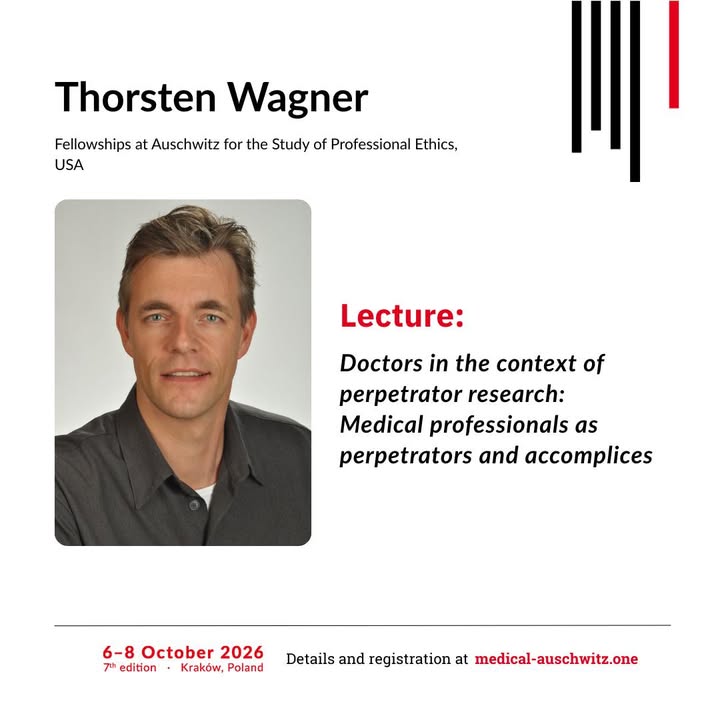
Meet Thorsten Wagner the Principal Scholar of FASPE – Fellowships for the Study of Professional Ethics– and has been involved with the organization since its beginnings in 2009.
He is a German historian, who grew up in Denmark and completed his undergraduate studies at the University of Tübingen, Germany, and his graduate work at Hebrew University in Jerusalem, the Technische Universität Berlin, and the Freie Universität Berlin, earning his MA from the TU Berlin in 1998. Living in Berlin for about two decades, Thorsten worked as a research fellow at the Danish Center for Holocaust and Genocide Studies and started teaching at the Humboldt University in Berlin. From 2010-2019, he held a permanent position as Associate Professor at the Danish Institute for Study Abroad/University of Copenhagen. Having authored numerous academic publications in the fields of Modern German and European Jewish History, antisemitism, Holocaust studies, cultures of memory, and Israeli history and society, he also worked as the historical consultant for the acclaimed documentary “Germans and Jews”, dealing with contemporary Germany, its relationship to its Nazi past and the reemergence of Jewish life.
His previous lectures are available in our E-library for your reference: mra.piebm.org/library/filter/authors:thorsten-wagner/
🌐Check the full program at: www.medical-auschwitz.one/conference/program
✅Register at medical-auschwitz.one/conference/registration
#MedicalReviewAuschwitz #MedicalEthics #MRA #HolocaustEducation

Medical Review Auschwitz
"We should always keep the memory of Auschwitz alive in our daily lives."
These words were spoken by Dr. Mitsuo Kaneda during his visit to the Kraków Medical Society in 1983.
A physician from Japan, Dr. Kaneda translated the very first issue of Przegląd Lekarski – Oświęcim (Medical Review – Auschwitz) into Japanese after reading its English edition. Reflecting on the journal, he described it as a powerful condemnation of war crimes and a reminder that medicine can be both a force for good and a tool of destruction—depending on the choices of those who practice it.
Drawing parallels between Auschwitz and Hiroshima, he posed questions that remain as relevant today as they were four decades ago:
Why do we become physicians? What responsibility do we bear?
Today, we are proud to publish the English translation of Dr. Kaneda's remarkable address as the second article in this year's MRA TRANSLATION project.
Read it and discover why his message continues to resonate across generations and continents.
#MedicalReviewAuschwitz #MRATRANSLATION #MedicalHistory #OpenAccess #HolocaustStudies #MedicalEthics #HistoryOfMedicine
Hiroshima and Auschwitz – Medical Review Auschwitz [E-library]
Meeting of the Kraków Medical Society, 15 June 1983 From 13 to 18 June 1983, Dr. Mitsuo Kaneda, a Japanese physician from Tokyo who translated the first issue of Przegląd Lekarski ‒ Oświęcim (Medical Review ‒ Auschwitz) into Japanese, visited Kraków at the invitation of the Kraków Medical …
Medical Review Auschwitz
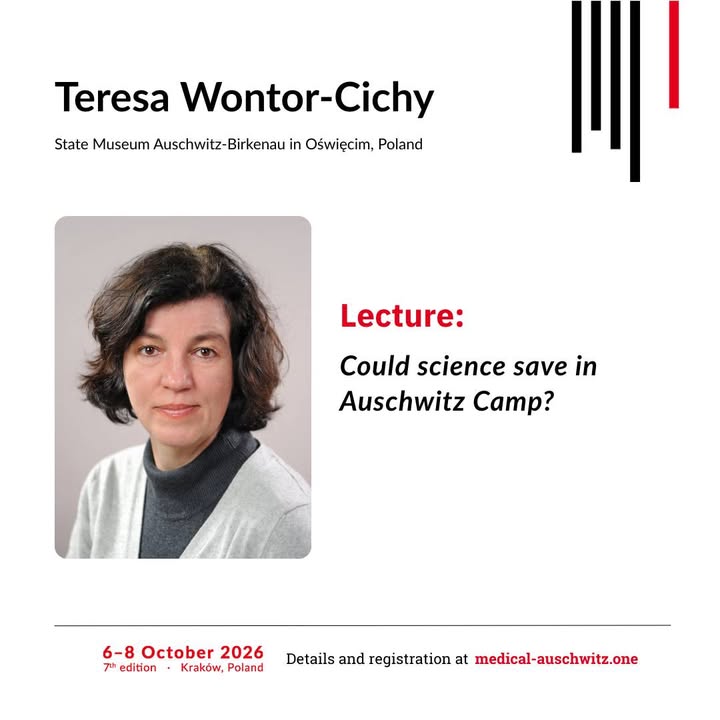
Meet Teresa Wontor-Cichy
Historian, Ph.D., in the Research Centre of the State Museum Auschwitz-Birkenau in Oświęcim Auschwitz Memorial / Muzeum Auschwitz.
Her professional research is focused on Auschwitz and the Holocaust. She is the author of several historical books exploring the experiences of different prisoner group.
She is a lecturer on several aspects of Auschwitz camp history and developed online lectures on The Roma in Auschwitz, Medical Crime in Auschwitz Camp, and The Clergy and Religious Life in Auschwitz. She also presented the “ABCs of Christian, Polish–Jewish relations” at the Pontifical University of John Paul II in Kraków (2014). In addition, she was a guest lecturer accompanying an international, traveling art exhibition called “Forbidden Art,” which displays artifacts made by Auschwitz prisoners (Kansas 2014, Michigan 2016). Furthermore, she frequently guides visitors in regular tours and study programs as well as serves as a historical consultant for many documentary films about Auschwitz history.
Teresa Wontor-Cichy has been our lecturer since 2022. Her previous lectures are available in our E-library for your reference: mra.piebm.org/Teresa_Wontor_Cichy
🌐Check the full program at: www.medical-auschwitz.one/conference/program
✅Register at medical-auschwitz.one/conference/registration
#MedicalReviewAuschwitz #MedicalEthics #MRA #HolocaustEducation
Medical Review Auschwitz
Did you know that one of the most important publications documenting medicine in Auschwitz was translated into Japanese by a doctor who believed its message belonged to the entire world?
In the early 1970s, Japanese surgeon Dr. Mitsuo Kaneda received a copy of Przegląd Lekarski – Oświęcim (Medical Review – Auschwitz). Although he could not read Polish, he immediately recognized that the testimonies and research it contained were too important to remain accessible only to Polish readers.
He devoted years to translating selected articles into Japanese. Working with experts in Polish and English and consulting Prof. Józef Bogusz on the accuracy of the translation, Kaneda persevered despite repeated rejections from publishers. In 1982, the first Japanese edition of selected texts from Przegląd Lekarski – Oświęcim was finally published.
Why did he dedicate so much of his life to this project?
As a military surgeon during World War II, Kaneda had witnessed firsthand how war could destroy not only lives, but also the very ethics of medicine. He believed that the experiences documented in Przegląd Lekarski – Oświęcim offered a universal lesson about the moral responsibility of physicians—and that this lesson deserved to be heard in Japan as well.
Thanks to his determination, the testimonies of Polish physicians and Auschwitz survivors crossed the boundaries of language, culture, and continents.
It is a powerful reminder that Przegląd Lekarski – Oświęcim was never just a medical journal. It became a vehicle for memory and an enduring call to uphold medical ethics—one that continues to inspire physicians, researchers, and translators around the world.
#MedicalReviewAuschwitz #MedicineBehindTheBarbedWire #MedicalEthics
Medical Review Auschwitz is attending an event.
As we prepare for the conference, we are pleased to launch our speaker introduction series, highlighting experts who will be sharing their knowledge and insights at this year's conference.
Over the coming weeks, we will spotlight each of our speakers individually.
We begin by introducing our first speaker, whose expertise and experience will contribute valuable perspectives to our event.
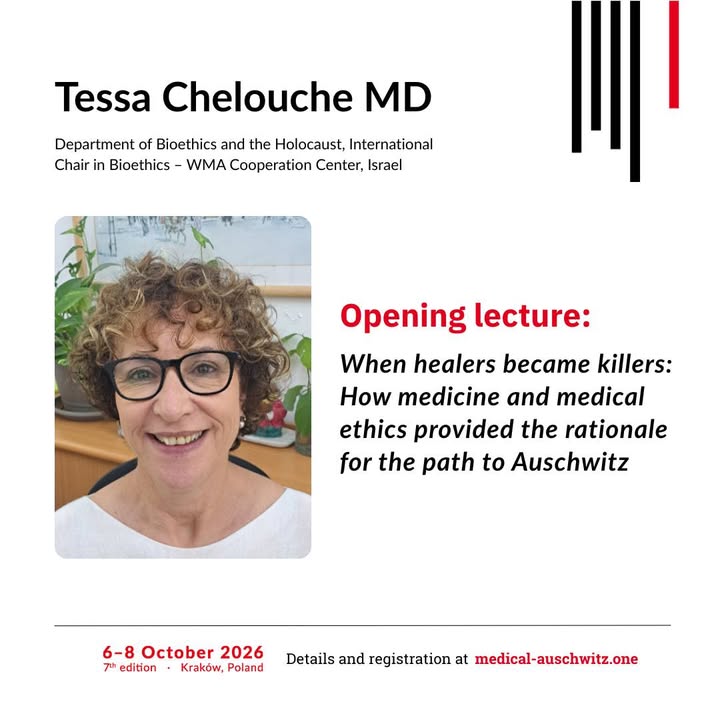
Meet Dr. Tessa Chelouche, originally from South Africa, family physician and director of a primary care practice in Israel.
For the past 20 years, and continuing in the present, she has directed and taught an undergraduate course on Medicine and the Holocaust at the Rappaport Faculty of Medicine, Technion Institute, Haifa, Israel.
She is the co-editor of the Casebook on Bioethics and the Holocaust which has been translated into 7 languages. She has published numerous articles and book chapters on Medicine during the Nazi period, Bioethics and the Holocaust and is a member of the Lancet Commission on: Medicine and the Holocaust: Historical Evidence, Implications for Today, Teaching for Tomorrow (that was published in the Lancet journal in November 2023).
🌐Check the full program at: mra.piebm.org/conference/program
✅Register at mra.piebm.org/conference/registration
#MedicalReviewAuschwitz #MedicalEthics #MRA #HolocaustEducation
Medical Review Auschwitz is attending an event.
We are pleased to announce revised registration fees for the 2026 Medical Review Auschwitz conference❗ ❗ ❗
Owing to financial support provided under the Vectors of Science (Wektory Nauki) programme, co-financed from the state budget by the Polish Minister of Science and Higher Education (Ministerstwo Nauki i Szkolnictwa Wyższego) the previously announced registration fees have been reduced and replaced with new, lower rates available to conference participants.*
See below what we have planned for you EACH DAY of the conference.
If you haven't registered yet, there's still time—sign up today! October 6–8 is just around the corner.
Details & registration: mra.piebm.org/conference/fees
Participation fees include:
Day 1: Transfer from Kraków to Auschwitz-Birkenau Memorial and Museum and back, guided tour in English with a special entry to Block 10 (up to 3 h), visit to the exhibition “Negatives of memory. Labyrinths” by Marian Kołodziej, refreshments and lunch.
Day 2: Course materials (PDF),refreshments and lunch, certificate of attendance
Day 3: Refreshments and lunch, certificate of attendance
*Participants who have already registered may request a partial refund by contacting: [email protected]
Medical Review Auschwitz updated their status.
When this happens, it’s usually because the owner only shared it with a small group of people, changed who can see it or it’s been deleted.