We invite you to the 2026 edition of the Medical Review Auschwitz Conference: Medicine Behind the Barbed Wire. Registration is open now!
6–8 October 2026 · Kraków, Poland
Problems Facing the Medical Profession during the Nazi Occupation of Poland as Described in Fiction and Memoirs
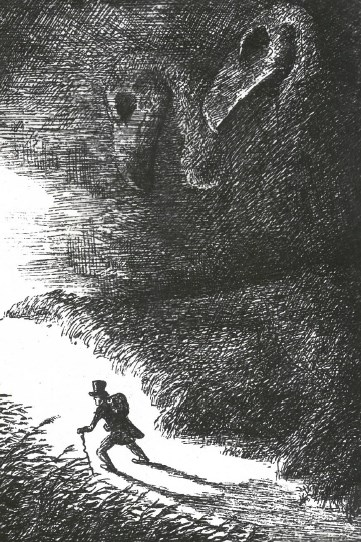
“Hippocrates, in his great wisdom, did not foresee the creation of the Gestapo.” (Felicjan Loth, “Byłem lekarzem na Pawiaku1,” in Pamiętniki lekarzy. Warszawa: Czytelnik, 1964, p. 338)
The reflections presented in this article2 are part of a study on the medical profession in the Polish People’s Republic and are based on an analysis of passages collected from a set of homogeneous, comparable fiction and physicians’ memoirs.3 Alongside my primary interests and research, I have started exploring issues concerning the observance of medical ethics and physicians’ duties in “abnormal” conditions, that is, under the Nazi German occupation of Poland during the Second World War.
The war and occupation of 1939-1945 challenged many people with difficult moral issues related to their professional activities. For example, whether you should continue to work in your profession under wartime conditions for the forces and authorities occupying your country, and, in a sense, collaborate with them. Many had no option but to say “yes” because their profession could not be abandoned, as it primarily served the population of their occupied country, that is, the people of Poland. Bakers baking bread for the people, railway workers maintaining the railway lines and trains, pharmacists preparing medicines, or doctors treating patients could not have refused to continue working. Many were forced to say “no,” and take up a job that provided a living and was necessary for society, but did not involve collaboration with the occupying power. Actors could not perform in theatres run by the occupying authorities, nor could Polish journalists work for a pro-Nazi daily newspaper.
A doctor had to continue working, he was needed and had no choice whether to treat Germans or Poles. He had to help persons who were ill, people in need of medical assistance, regardless of the language they spoke or the party they belonged to, regardless even of whether they had murdered the doctor’s family. A doctor may not refuse to help a sick person; as soon as he starts working in the medical profession, he is no longer a private person, he is an institution, and must discard his own emotions and feelings. Romuald Gutt writes in his memoirs,
Although as a citizen, a doctor should have some political insight, the moment he puts on his white coat and picks up a stethoscope or a scalpel, he automatically becomes a professional who is not interested in his patient’s socio-political opinions. That’s when all his patriotic or chauvinistic feelings, all his preferences vanish. From that moment on, for him, people fall into only two groups: the healthy and the sick.4
But can a man divest himself of all his emotions, feelings, and beliefs when he puts on his white coat? Can he forget who the patient is? As we know, the years under wartime occupation were a test of his attitude to his profession, to the Hippocratic Oath that doctors promise to observe regardless of their political affiliation. The trials of Nazi criminals, who included practitioners of the medical and nursing professions, demonstrate that the words of the physicians’ oath can take different interpretations.
Under wartime occupation, the Polish medical profession underwent perhaps its biggest test of character in modern history, from which it emerged victorious. Although individuals might have faltered, I will not consider them in the overall appraisal. I am interested in the ethical issues faced by Polish doctors. This aspect can be discussed even on the basis of the doctors’ memoirs and fictional works that have been published.
Doctors in occupied Poland could be divided roughly into two groups: those working for the underground resistance movement, and those not working formally for the resistance. It’s worth considering the latter, because through their profession they were drawn into the battle against the enemy, or they joined in the fight against the occupying power voluntarily, often without defining their views precisely, or perhaps even without specifying them at all.
In our medical work under wartime occupation, we had to make life as easy for our compatriots as possible with our services, which often conflicted with the regulations of the Nazi regime. We had to save our fellow citizens from extermination, forced labour, deportation, and concentration camps.5
Those who formally worked in the resistance movement were soldiers, organizers, wartime propagandists, and above all doctors, all pursuing their professional duties. Combatants who were physicians did not fight with weapons in hand; they battled alongside the soldiers to keep them alive. They organized first-aid stations to support military operations against the enemy; they organized hospital stations and provided premises in municipal hospitals for surgery and treatment for serious casualties. Risking their own lives, they admitted wounded combatants to hospital and abducted them from German detention if an informant disclosed the whereabouts of a casualty to the enemy. In their everyday work, doctors engaged in combat made choices between saving the life of a wounded stranger and saving their own life. As a rule, they chose the life of their patient, of course, but it was not an easy choice. The occupying power was ruthless and perfectly organized to sniff out “offenders,” but the situation, though dangerous, did not always pose such a complicated moral challenge for others as it did for doctors who worked clandestinely.
Undercover physicians included all those doctors who were deprived of their liberty, imprisoned in concentration camps and prisons but still strove to save lives; and those who were free and saved lives by issuing fabricated medical certificates and organizing aid for civilians. Doctors locked up in prisons worked in new conditions. Dr. Felicjan Loth writes about his work in Pawiak Prison in Warsaw,
I started out on a most extraordinary job. An emergency service lasting over three years in utterly extraordinary conditions. A combination of medical work and undercover activities. Situations full of tension, often at odds with one another. Sometimes it was not at all clear what should take precedence. My conscience and ethical principles as a doctor often clashed with the demands of the moment and clandestine work. There were conflicts of interest and insoluble dilemmas, but they had to be resolved, usually very quickly, on the spot, without a moment’s reflection.6
Doctors often faced complex problems: choosing between fighting to save their own life or the lives of patients, for whom it might have been better to die straightaway; then at least they would have probably been spared a terrible ordeal under interrogation. Doctors faced the dilemma of whether to save a life, only to expose the patient to torture and death straight after his recovery. But even when death at the hands of the invaders was a certainty, they still struggled to save lives. They faced profoundly human questions about the purpose of their efforts, and they were troubled by the possibility that under interrogation their patient might denounce others. Dr. Loth presents issues related to frequent cases of treating patients who were subsequently taken away to be executed. He describes the situation where a staple and wire were removed from a healing bone in a patient who was scheduled to be shot, as these items were needed in the hospital for other operations:
After a number of similar cases, we began to wonder whether we had the right to save the lives of these people. And what for? To expose them to the pain of surgery, the torture of interrogation, the risk of them denouncing the organization and many others, only to be executed?7
However, our sense of professional duty prevailed, as did the duty to save the life of a person in need of help. But then came the reflection: “don’t philosophize, you are a doctor and it is your duty to fight … to save lives.”8
Undercover doctors had many other matters to resolve. They had to determine whether they had the right to “organize” [artificially induce] an outbreak of epidemic typhus in the prison hospital, thereby gaining the opportunity to send those they infected with typhus to the city hospital, from where they could be helped to escape. Could they risk not only their own lives but also, and above all, the lives of their patients to do this? The solution they chosen violated the medical oath, but with the consent of those involved, prisoners were injected with typhus.
However, a new issue arose when an infectious diseases ward was organised in the prison, as there were a lot of escapes of prisoners from city hospitals. What should be done to avoid raising suspicions that the epidemic was being artificially sustained? It could not die out immediately. We had to “organize” a few more typhus cases.
We had no choice. With Hippocrates and Professor Szenajch on our minds, Dr. Śliwicki and I put the burden of responsibility on our consciences. We chose two prisoners convicted for criminal offences as victims. They fell ill within a few days of each other, bringing the Pawiak typhus epidemic to an end.9
The prisoners were selected to save others and the doctors themselves. It’s probably easier for the memoirist to talk about it 20 years later than it was to make the choice at the time. And here, patriotic feelings turned out to have an influence. The choice was not random, they did not want to act haphazardly. The criminals who were chosen were presumably strong enough for the infection not to do them much harm. This choice of the lesser evil, it seems, best suited their conscience in the situation and, in a sense, justified what they did. But a criminal is still a human being, and his life, too, was in the hands of the Gestapo. What prevailed was the political argument, an ideological belief, and the universally human moral judgment instilled in everyone. The choice fell on individuals considered to be on the margins of society in any circumstances.
I am not excusing Nazi criminals who held medical degrees, and some of them professorships as well. However, I want to draw attention to certain mechanisms in the choices a person makes. I don’t think you can be just a doctor. You are a person with a specific culture, and this culture determines the way you perform your professional duties. Medicine is the profession in which an individual’s comportment must be particularly principled, in any conditions, and perhaps especially in difficult times such as war, natural disasters, and especially political and ideological turmoil, which also bring a great deal of conflict for members of the medical profession.
The period under wartime occupation required Polish doctors working as free men to provide medical assistance both to the occupying powers and to resistance fighters. As a result, they had to conduct some of their professional activities clandestinely, because they were living in a social circle that judged them not only as professionals, but also as people taking a specific political side. People did not understand that it is a doctor’s duty to help everyone; they judged doctors and their work from their own perspective. This issue, even though it has only been addressed in a novel, undoubtedly presents a general overview of the wartime experiences of many Polish doctors working as free men. I am referring to Józef Stompor’s novel Człowiek z lancetem [The Man with the Lancet]. A surgeon in a small town during the war is forced to operate on a wounded German policeman. The difficult operation is a success. During preparations for the operation, the surgeon starts having doubts. He thinks to himself, “What? You’ve been murdering people, and now you look at me pleadingly, asking for help? The devil with you! I hope you die soon!” but says imperiously in German, “On the table, please… On the operating table.”10
By operating on a German policeman, he saved a man, but he also saved other people and himself as well. Yet in the town, people were saying: “Is it true that this new hospital director is a Volksdeutscher11?”12 Many of his patients made excuses for the doctor and thought he had done the right thing, but many others stopped talking to him. In the opinion of some, you should never help the enemy. The surgeon made himself even more open to censure, because he treated the German police commander’s wife, who was a very seriously ill. At the same time, resistance fighters from the Peoples’ Guard13 turned to him for help. He went into the forest14, operated in primitive conditions, and treated them. He admitted a wounded resistance man to hospital, treated him, and facilitated his escape. But there were nationalist gangs15 operating in the forests as well. They forced him to treat their own wounded and, at the same time, did not allow him to treat the People’s Guard. They brought him over to their camp. They treated him brutally, warning him: “We have brought you here to give you a warning,” one said, looking him in the eye. “We know you’ve been helping the Communists. If you don’t stop that, we’ll shoot you. That’s all! Take him away!”16
The doctor faces a dilemma: should he take refuge and hide in the forest, especially as the Germans have warned him, too, that they know of his contacts with resistance men, or should he stay in town? If he goes into the forest, to the “Communists,” the hospital will be left without a surgeon, and the people will have no medical assistance. The question is who to help and who not to help. Are you allowed to make a choice? Can you leave the hospital without a doctor to save your own life and future prospects? His decision is clear. He stays and treats all comers in line with his professional duties. There are reprisals from the occupying authorities. He’s arrested, beaten up, his ribs are broken, he is taken to be shot, but is “liberated” by the People’s Guard. He spends the rest of the war under the care of the People’s Guard, licking his own wounds.
When the Germans flee, the people in the town think he must have fled with the Nazis. No one knows what happened, or perhaps they don’t want to know because it’s more convenient. When they see him return after the liberation, they accuse him of collaboration. He’s interrogated by a representative of People’s Poland, who refuses to acknowledge that he has only done his professional duty in accordance with its obligations, so now he wonders how he should proceed. He made a choice consistent with the ethics of his profession, and paid for it with a loss of health. He risked his life, and forfeited the respect of the local people, whose standards of respect for a person are not the same as those laid down by the ethics of the medical profession. His problems did not come to an end when the Germans fled. A new government has come, staffed with people with rather peculiar views on the tasks of the medical profession.
We find a continuation in Jerzy Lutowski’s play Ostry dyżur (Accident and Emergency), which offers a sequel to this epic of an honest man.17 Its main character is another surgeon who provided medical care to a wounded resistance fighter from a gang that stayed in the forest after Poland’s liberation18. They called for him. He didn’t know who it was he was helping, but even if he had known, could he have refused? Yet in return for doing his professional duty, he was arrested by the Communist authorities and convicted of collaborating with the gangs. His professional career and personal life were ruined, and several years later, when there was a need to operate on a politician, he was not allowed to perform the operation. The sick man’s colleagues put his life at risk because they were afraid that the doctor might seek revenge on the man in need of help even though he did not know him. A professional politician cannot understand that
Dr. Osiński is a physician! No matter what and above all, he is a physician. He has his professional ethics! And those ethics don’t see any political colours or shades. They require him to come to the assistance of patients … Every patient, whoever he happens to be.
Medical ethics are not the same as a soldier’s or a politician’s ethics, but fulfilling the tasks arising from them requires a high level of personal conduct and mental resilience. Practising the medical profession is not easy, leaving aside the technical tasks. It is not easy, and has never been easy, considering the moral conflicts to which doctors are particularly prone.
The war in occupied Poland, the concentration camps, the street round-ups, and the brutality of the occupying forces made people – including doctors – crack up. In his harrowing concentration camp memoirs, Dr. Władysław Fejkiel19 writes,
Sometimes, in a reign of terror, it’s difficult to expect the average person to behave any otherwise. Nonetheless, there were quite a few who were able to muster up courage and dedication and rise to the occasion.20
These people lived lives they will never forget; their experiences left a lasting mark on their psyche.
We should also remember the doctors in the resistance units who provided aid in primitive conditions, working “miracles” without the right pharmaceuticals, without the right food or sanitary conditions. They provided patients not only with medical assistance but also gave them a sense of security, restoring their trust in the effectiveness of the help they provided and in the high value of every life.
1945 brought the end to the war in Poland, but not for some of the doctors. Some doctors travelled to war-torn Korea to aid war victims and work there in primitive conditions. They had to choose between taking a rest after the terrible war that had finished in their homeland, a quiet family life and professional and financial security, and the price of human life. They chose the latter. They stood and still stand on guard of life. Hardships have not broken them. Most of them are not afraid of responsibility. But is the test of their professional courage over? In the medical profession there have always been choices to be made, and will continue to be made.
The reflections I have presented here, based on a review of a rather homogeneous collection of passages, are not intended as a synopsis of the issues at hand. I have not covered all the professional issues faced by physicians, but only those that correspond to the scope of Przegląd Lekarski – Oświęcim. I feel obliged to point out that memoirs and fiction play a significant role in creating stereotypes related to the role and importance of physicians in society. Books of this kind show only a laudatory image of the men and women in white coats during the difficult times of wartime occupation – the men and women who were able to come out victorious from situations of conflict.
***
“What the lack of respect for the lives of others, and what contempt for the life of a person of another nationality or race can lead to, we, the people of Poland regrettably learned the hard way during the Nazi German occupation of our country. Surely that was a sufficiently depressing lesson. So let’s stand as champions of all life by honouring and cherishing every life, because everyone has the right to live.” Wiesław Szenajch, Myśli lekarza. Warszawa: PZWL, 1958, p. 12.
a—notes by T. Bałuk-Ulewiczowa, PhD
- Under the German occupation of Poland during World War II, Dr. Felicjan Loth (1914 – 1982), the author of this article from the anthology Pamiętniki lekarzy [Physicians’ Memoirs], worked as a surgeon in the Warsaw Red Cross Hospital. He was a member of the Polish Home Army, the largest resistance movement in occupied Europe, and risked his life by treating and operating on Jewish patients.a Powstańcze Biogramy – Felicjan Loth ↩︎
- The original Polish version of this article was first published in the 1967 edition of Przeglad Lekarski – Oświęcim.a ↩︎
- Pamiętniki lekarzy [Physicians’ Memoirs]. Warszawa: Czytelnik 1964; Jerzy Lutowski, Ostry dyżur: Sztuka w 3 aktach [Accident and Emergency: A Play in Three Acts]. Warszawa: Czytelnik 1956; Józef Stompor, Człowiek z lancetem [The Man with the Lancet]. Warszawa: Wydawnictwo Ministerstwa Obrony Narodowej, 1964; Anna Czuperska-Śliwicka, Cztery lata ostrego dyżuru [Four Years in Accident and Emergency]. Warszawa: Czytelnik, 1965. ↩︎
- Romuald Wiesław Gutt, “Wspomnienia i refleksje” [Recollections and Reflections], in Pamiętniki lekarzy, p. 759. ↩︎
- Kazimierz Romuald Koronkiewicz, “Migawki lekarskie,” [Medical Episodes] in Pamiętniki lekarzy, 1964. ↩︎
- Felicjan Loth, p. 334. ↩︎
- Ibid, p. 338. ↩︎
- Ibid, p. 340. ↩︎
- Ibid, p. 337. ↩︎
- Józef Stompor, p. 15. ↩︎
- Volksdeutsche was a term used by the Nazi German regime for ethnic Germans living in countries occupied by the Third Reich during the Second World War. They were generally given privileged treatment by the German occupying authorities in return for collaborative conduct.a ↩︎
- Ibid, p. 271. ↩︎
- The People’s Guard (Gwardia Ludowa), a Polish left-wing (Communist) armed resistance movement founded in 1942 to fight the German forces occupying Poland.a ↩︎
- Polish resistance units used the country’s forests as hideouts.a ↩︎
- “Nationalist gangs” (bandy nacjonalistyczne), a derogative expression in the Stalinist sociolect denoting Polish non-Communist resistance groups (primarily the Home Army). ↩︎
- Ibid, p. 160. ↩︎
- Jerzy Lutowski, p. 46. ↩︎
- Some of the Polish pro-independence resistance units stayed in the forests after Germany’s defeat and engaged in guerilla warfare against the Communist and Soviet forces “liberating” the country.a ↩︎
- Dr. Fejkiel was co-editor of Przegląd Lekarski – Oświęcim and a contributor to the journal.a ↩︎
- Pamiętniki lekarzy, p. 463. ↩︎
How to cite
Dziewanowska-Machnikowska S., "Problems facing the medical profession during the Nazi occupation of Poland as described in fiction and memoirs", Chłopicki W., trans. Originally published as "Problemy zawodu lekarskiego w okresie okupacji hitlerowskiej w świetle literatury pięknej i pamiętników", Przegląd Lekarski – Oświęcim, 1967: 48-51.
The Medical Review Auschwitz Project is an international academic forum whose purpose is to share information, scholarship and views on matters related to learning about and from the history of medical involvement in Nazism and the Holocaust. All opinions expressed by any author, speaker or participant are solely his or her opinion and not the opinion of the Project, its organizers or any other participants in the Project.