
Medical Review Auschwitz
Today, the Jagiellonian University marked the 81st anniversary of the liberation of the Auschwitz-Birkenau German Nazi concentration and extermination camp with a solemn gathering in Collegium Novum.
The session, opened by Prof. Igor Gościński, Chair of Kraków Medical Society, and Prof. Maciej Małecki, Vice-Rector for Collegium Medicum, took place on the eve of International Holocaust Remembrance Day, reaffirming the University’s commitment to memory, reflection, and responsible historical education.
Speakers emphasized the enduring duty to remember the victims, honor the witnesses, and confront the mechanisms of hatred and totalitarian violence.
The session also highlighted ongoing scholarly work, including the Medical Review Auschwitz Project, which continues the legacy of Przegląd Lekarski – Oświęcim (1961–1991), one of the earliest efforts to document Nazi medical crimes and preserve this crucial body of research.
You can learn more about the Medical Review Auschwitz Project on our website: mra.piebm.org/project/
fot. PIEBM
Medical Review Auschwitz updated their cover photo.
Medical Review Auschwitz
6th edition of the international conference Medical Review Auschwitz: Medicine Behind the Barbed Wire would not have been possible without the generous support of the Ministry of Science and Higher Education to whom we extend our deepest thanks.
Ministerstwo Nauki i Szkolnictwa Wyższego
#MedicalReviewAuschwitz #MedicalEthics #MRA #HolocaustEducation
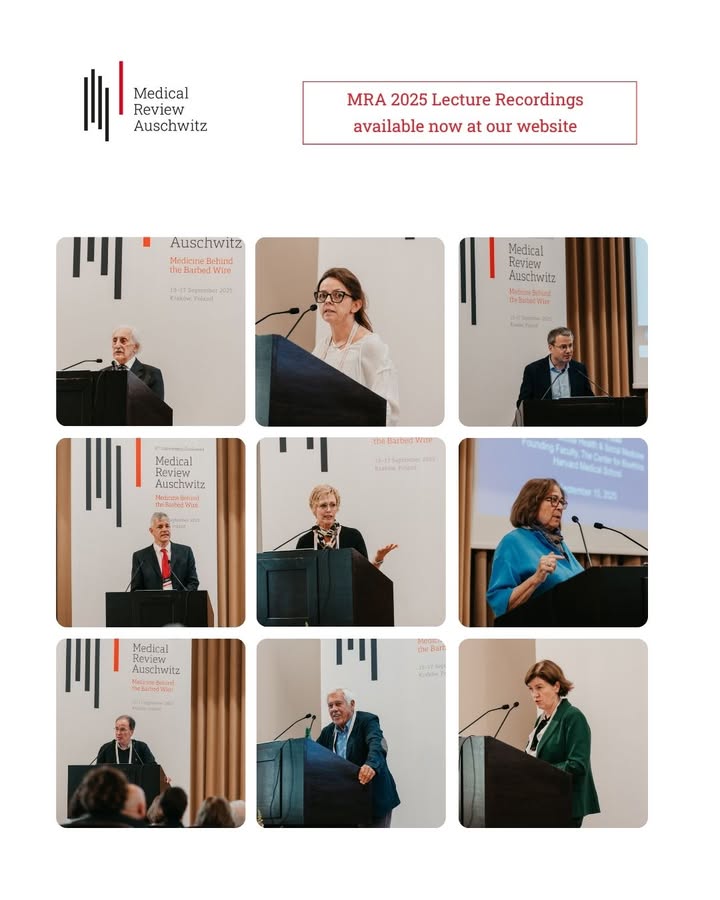
Medical Review Auschwitz
✨MRA 2025 Lecture Recordings
We are pleased to inform you that video recordings of this year’s conference lectures are now available on our website.
We hope these lectures will inspire your own research and reflections.
Video recordings:
mra.piebm.org/library/filter/related-event:medical-review-auschwitz-conference-2025/
✨ Pre-programme offer for MRA 2026 conference ! 6-8 October 2026
We also extend a cordial invitation to participate in next year’s conference.
A special pre-program registration package is now available.
Registration:
mra.piebm.org/conference/registration
Medical Review Auschwitz
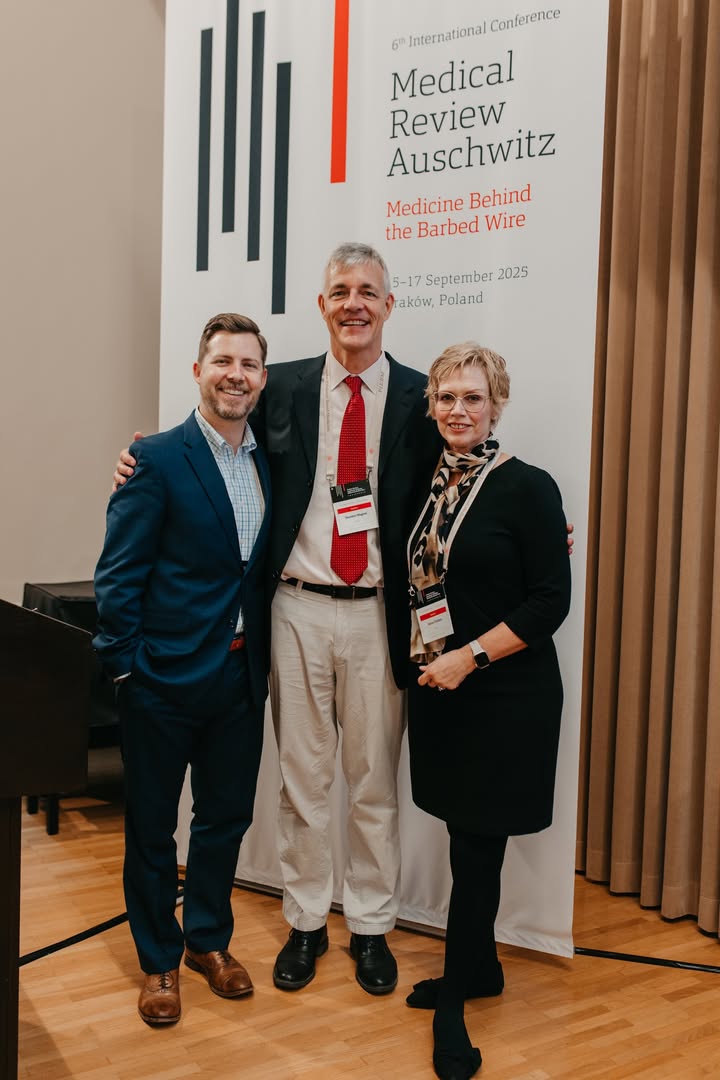
Thank you – FASPE – Fellowships for the Study of Professional Ethics
Medical Review Auschwitz
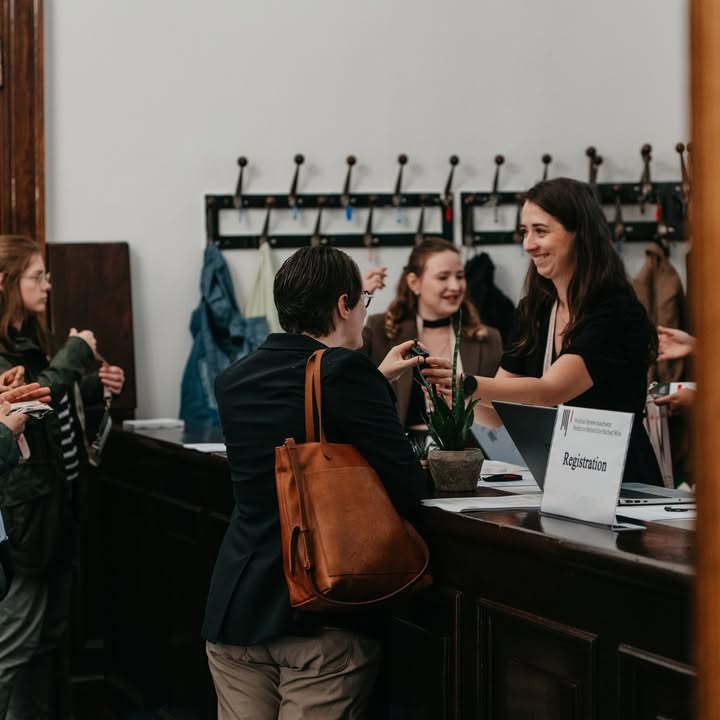
We are reflecting on the recently concluded 6th edition of Medical Review Auschwitz: Medicine Behind the Barbed Wire. We would like to sincerely thank all our speakers, guests and participants for making this conference such a meaningful experience.
Inspired by the ideas and discussions from this edition, we are already working hard to prepare the next one and look forward to welcoming you again.
Project was co-financed from the state budget by the Polish Minister of Science and Higher Education as part of Doskonała Nauka II (Excellent Science) program.
#MedicalReviewAuschwitz #MedicalEthics #MRA #HolocaustEducation
Medical Review Auschwitz
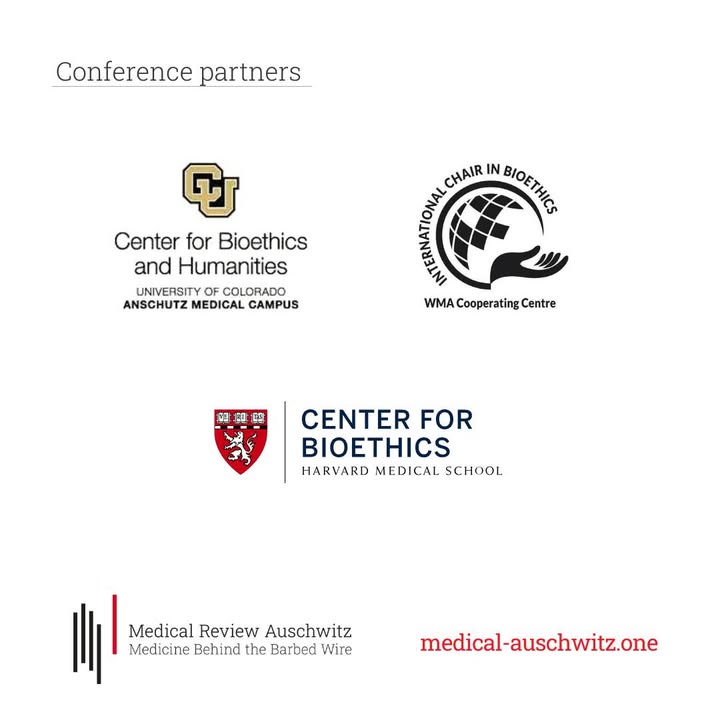
We would like to extend our sincere appreciation to our partners for their effort and support in making the 6th International Conference Medical Review Auschwitz: Medicine Behind the Barbed Wire a success.
We truly appreciate your contribution and look forward to future opportunities to work together.
◾ University of Colorado Anschutz Medical Campus
◾ Harvard Medical School Center for Bioethics
◾ International chair in bioethics – WMA Cooperation Center
◾ FASPE – Fellowships for the Study of Professional Ethics
◾ Centrum św. Maksymiliana w Harmężach
◾ Auschwitz Memorial / Muzeum Auschwitz
◾ Muzeum Krakowa
#MedicalReviewAuschwitz #MedicalEthics #MRA #HolocaustEducation
Medical Review Auschwitz
6th edition of the international conference Medical Review Auschwitz: Medicine Behind the Barbed Wire and the launch of our new website would not have been possible without the generous support of the Hans und Berthold Finkelstein Stiftung, to whom we extend our deepest thanks.
The Finkelstein Foundation, established by Bayer in 2023, honors the legacy of Dr. Hans Finkelstein, a Jewish chemist persecuted under Nazi rule. Its mission is rooted in remembrance, research, and resilience — values that deeply resonate with our own.
Through its commitment to historical responsibility, the Foundation supports projects that confront the crimes of National Socialism, particularly those connected to Nazi forced labor and I.G. Farben. It also empowers young leaders to advance democratic action and to cultivate a culture of remembrance for the future.
We are sincerely grateful for this partnership and for the Foundation’s dedication to fostering dialogue, reflection, and meaningful change.
#MedicalReviewAuschwitz #MedicalEthics #MRA #HolocaustEducation #remembrance
Medical Review Auschwitz
We would like to express our deepest gratitude to our valued conference co-organizer Okręgowa Izba Lekarska w Krakowie for invaluable contribution to the success of this year’s 6th international conference Medical Review Auschwitz: Medicine Behind the Barbed Wire
Thank you for your outstanding partnership!
Medical Review Auschwitz
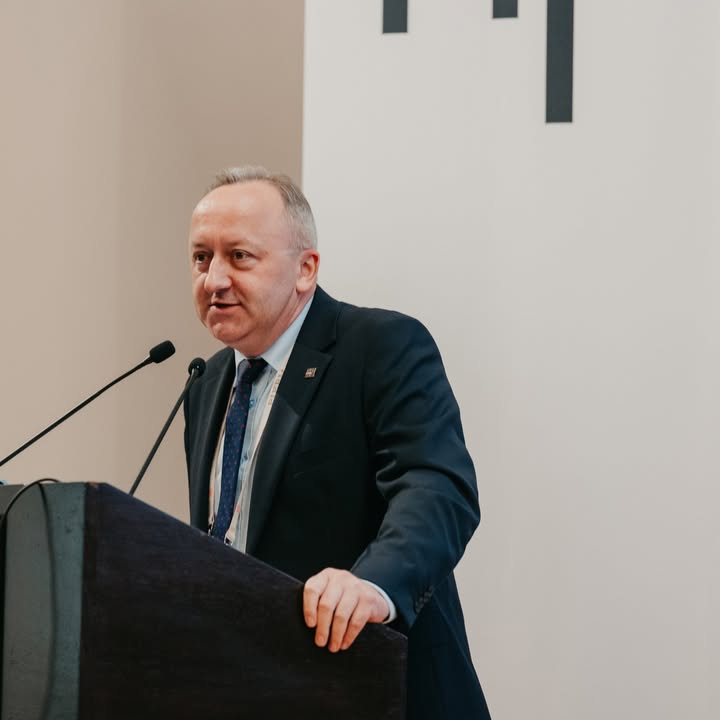
We extend our sincere gratitude to the Instytut Pamięci Narodowej (Institute of National Remembrance) for its invaluable support as a co-organizer of the 6th edition of the international conference Medical Review Auschwitz: Medicine Behind the Barbed Wire and for its generous contribution to the scholarship program, which enabled young physicians from the United States and Israel to participate in this important initiative.
This collaboration afforded fellows, participants and guests the opportunity to engage in a profoundly educational journey through Poland. The program included an exploration of Kraków under Nazi German occupation, visits to the @auschwitzmemorial and the Centrum św. Maksymiliana w Harmężach, as well as active participation in a substantive conference and workshops co-hosted by the Institute.
We were honored to be welcomed at the conference by Assoc. Prof. Karol Polejowski, Vice President of the Institute of National Remembrance, whose presence underscored the significance of the event.
One of the highlights was the lecture delivered by Filip Gańczak, who examined the enduring legacy of Jan Sehn—an emblematic figure in the pursuit of post-war justice and the development of historical investigation.
Equally significant were the workshops conducted by Aleksandra Baryła and Angelika Słodka of the Office of Search and Identification, which provided participants with rare insights into the rigorous and compassionate processes involved in recovering and commemorating the past.
We remain deeply appreciative of the Institute’s collaboration in this initiative, which has contributed to the advancement of international dialogue, remembrance, and scholarly exchange.
photos by Magda Rymarz
#MedicalReviewAuschwitz #MedicalEthics #MRA #HolocaustEducation #IPN
Medical Review Auschwitz
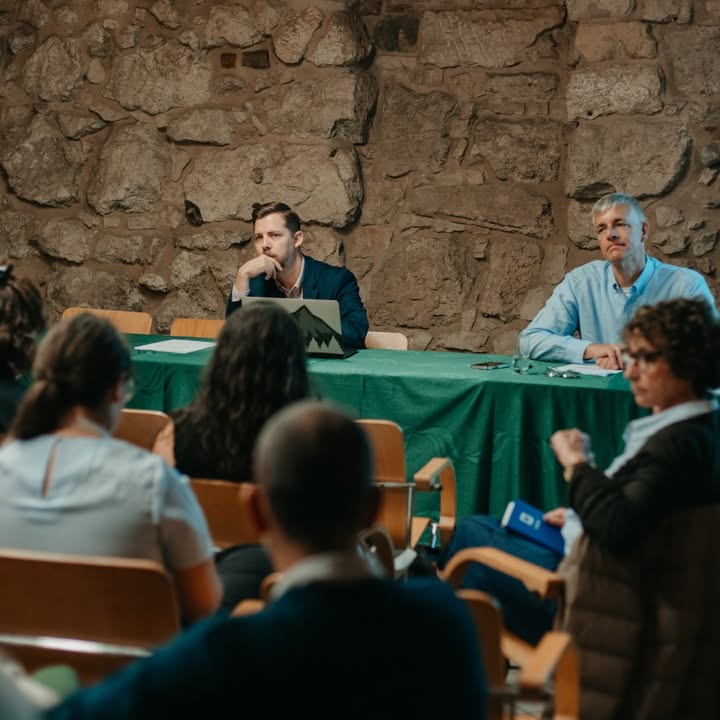
The conference concluded with a series of workshops on day 3.
This offered an opportunity for the participants to exchange reflections following their visit to the Auschwitz-Birkenau Museum and the lectures.
▪️ "Exploring the potential of search and identification work for war victims inside the Office of Search and Identification of the Institute of National Remembrance"
Presenters: Aleksandra Baryła, Angelika Słodka
@Institute of National Remembrance – Office of Search and Identification, Poland
This session introduces the work of a multidisciplinary team—historians, archaeologists, forensic experts, and geneticists—who investigate burial sites of victims of totalitarian repression (1917–1990). Operating across Poland and abroad, the Office of Search and Identification aims to restore public memory and dignity to those erased by communist regimes.
▪️"Motivations and Complicity: The Case of Herta Oberheuser"
Presenters: Jay Malone, Thorsten Wagner
@FASPE – Fellowships for the Study of Professional Ethics, USA
This workshop draws on historical case studies to explore the moral challenges faced by professionals under the Nazi regime. Using the example of physician Herta Oberheuser, FASPE invites participants to critically examine questions of complicity, responsibility, and ethical leadership within medical and academic contexts today.
Medical Review Auschwitz
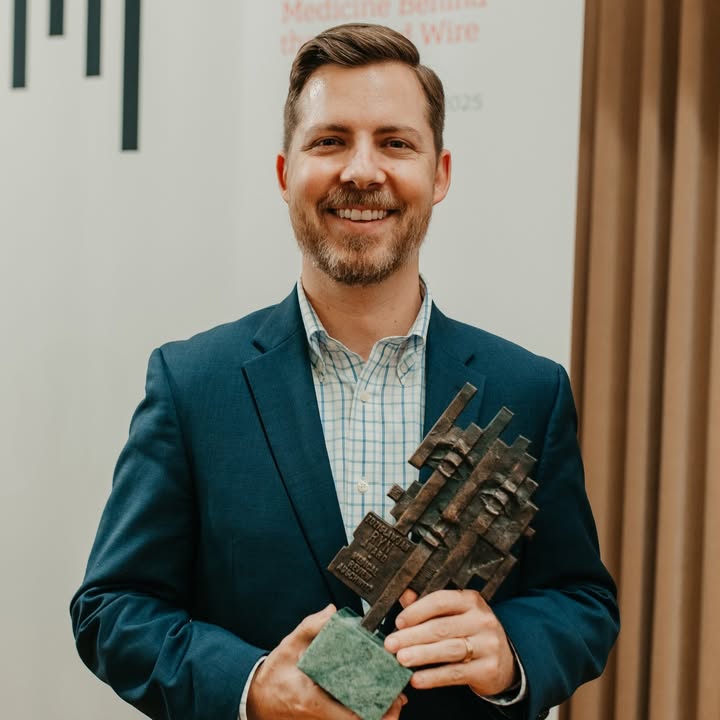
As in previous years, the Zdzisław Jan Ryn Award was presented in recognition for the best lecture, as determined by participant voting.
The prize—a statuette by sculptor Karol Gąsienica Szostak—was awarded to
Prof Jay R. Malone of Washington University School of Medicine in St Louis (USA), FASPE – Fellowships for the Study of Professional Ethics for his lecture “Suffering and the Moral Orientation of Presence.”
Prof Mildred Solomon was also presented with the best lecture award from last year’s conference, in which she participated remotely.
Medical Review Auschwitz
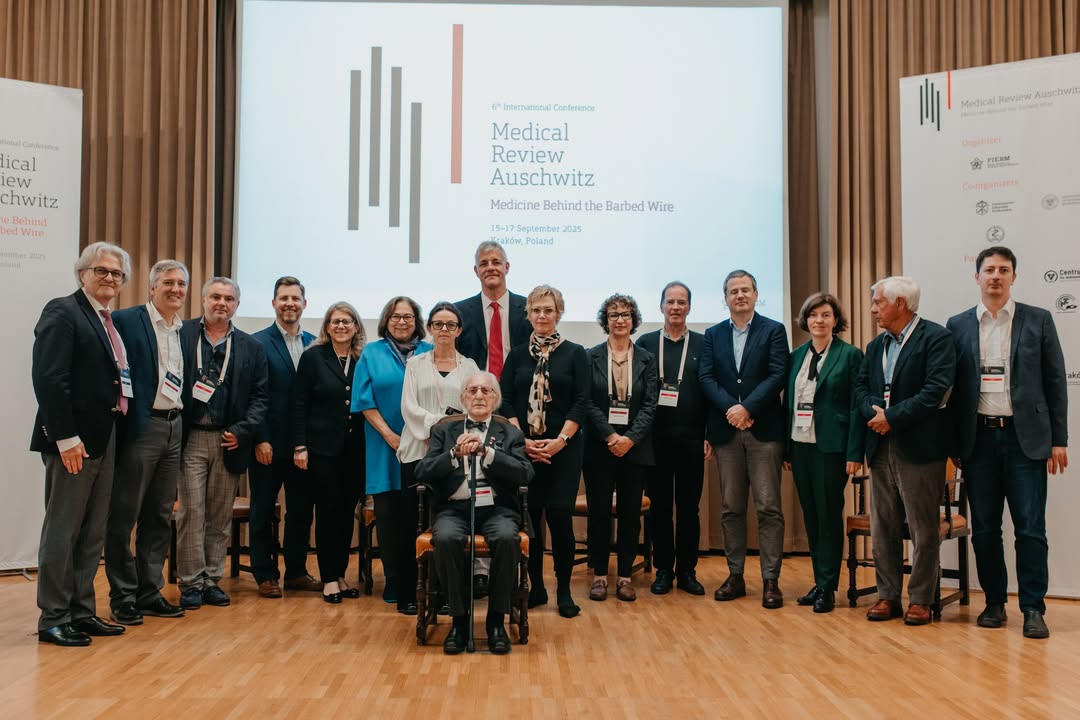
During the conference leading experts on medicine during World War II addressed the multiple aspects of violations of medical ethics by physicians and other health personnel serv#holocausteducation
Participants heard from physicians, historians, and legal scholars such as Prof Mildred Solomon (USA), Thorsten Wagner (USA), Prof Volker Roelcke (Germany), Karla Childers (USA), Prof Herwig Czech (Austria), Assoc Prof Kamila Uzarczyk (Poland), Dr Teresa Wontor-Cichy (Poland), Dr Filip Gańczak (Poland), Prof Michael von Cranach (Germany), Prof Marius Turda (United Kingdom), Prof Jay R. Malone (USA), Dr Katarzyna du Vall (Poland), Prof Hans-Joachim Lang (Germany), Dr Tessa Chelouche (Israel), Prof Rebecca Brendel (USA), and Prof Matthew Wynia (USA).
Presentations and panel discussions related these crimes of the past to present-day challenges, highlighting lessons for contemporary medicine and bioethics.
All lectures from this year's conference were recorded, and we will soon publish all the videos on our website.
In the meantime, you can already explore video lectures from previous editions of the conference, available online:
medical-auschwitz.one/library
#MedicalReviewAuschwitz #MedicalEthics #MRA #HolocaustEducation
Medical Review Auschwitz
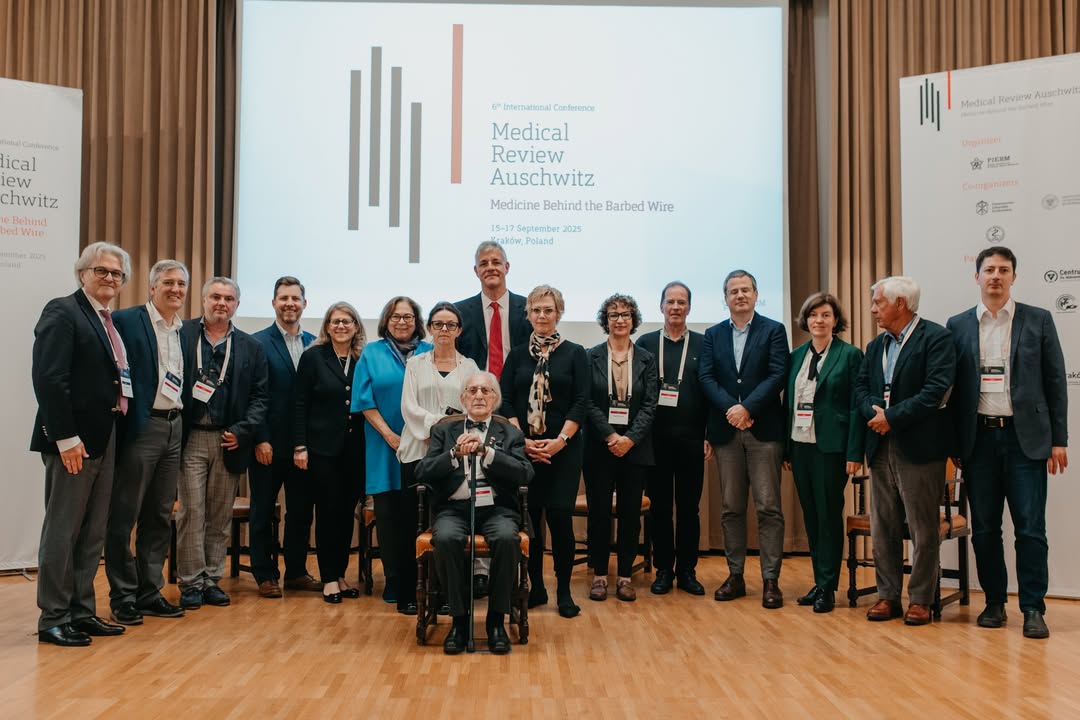
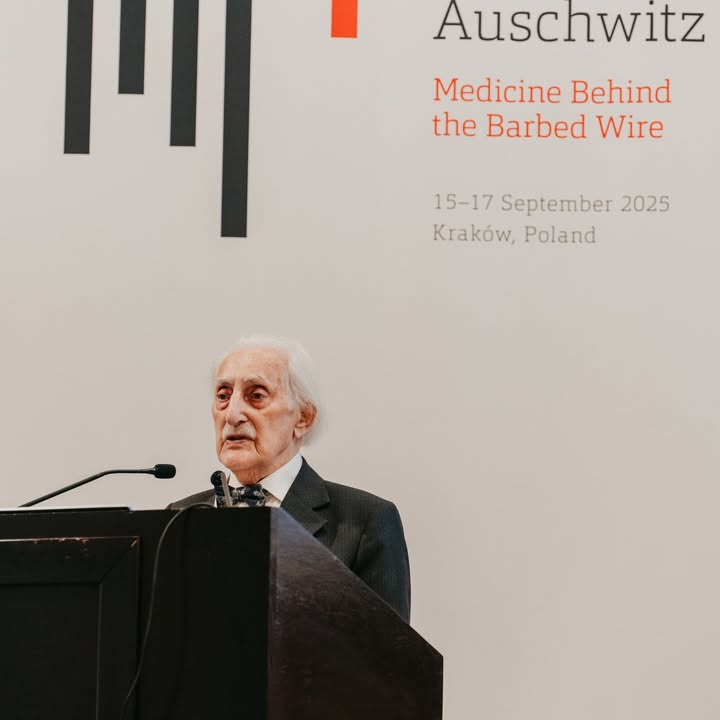
We are grateful to everyone who joined us for the just-concluded 6th edition of the international conference Medical Review Auschwitz: Medicine Behind the Barbed Wire.
The event brought together more than 100 participants from over a dozen countries, including young physicians from the United States and Israel
In an emotional address the guest of honor Dr Leon Weintraub, a 99-year-old survivor of German Nazi concentration camps spoke about his wartime experiences and stressed:
“It is our duty to preserve the memory of the victims of Nazi ideology and to oppose prejudice and hostility toward others. Denying or forgetting the consequences of Hitler’s ideology means depriving those victims of life once again.”
#MedicalReviewAuschwitz #MedicalEthics #MRA #HolocaustEducation
Medical Review Auschwitz updated their status.
When this happens, it’s usually because the owner only shared it with a small group of people, changed who can see it or it’s been deleted.
Medical Review Auschwitz
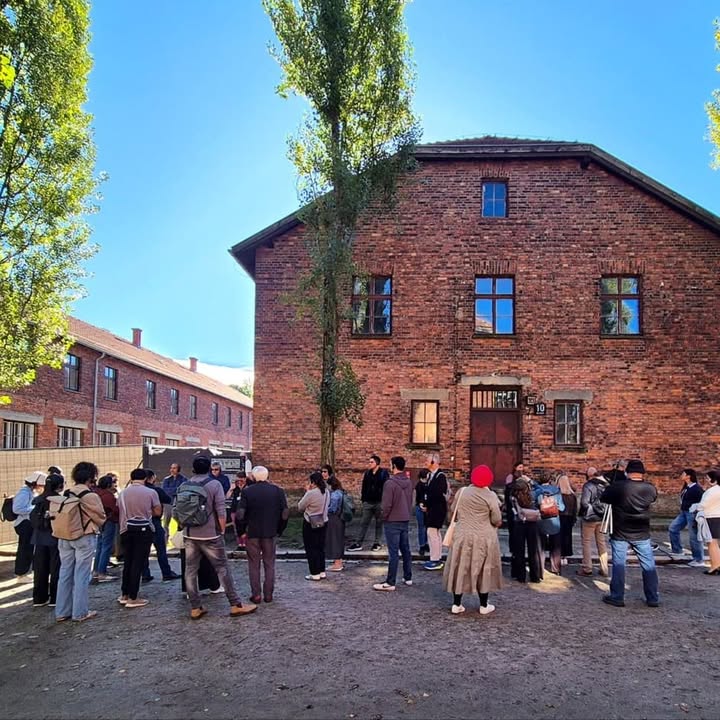
Reflecting on the Pre-Conference Study Visit: Auschwitz Memorial / Muzeum Auschwitz & Centrum św. Maksymiliana w Harmężach
Following the first full day of the conference, participants are now carrying forward the profound insights gained during the initial study visit to the Auschwitz-Birkenau Memorial and the “Negatives of memory. Labyrinths” exhibition in Harmęże.
Far more than a historical overview, this experience provided a powerful lens through which to examine the ethical disintegration of medicine under totalitarian regimes and the enduring relevance of professional responsibility in times of moral crisis.
At Auschwitz-Birkenau Memorial, participants engaged directly with the historical site where medical knowledge was distorted into instruments of harm. In Harmęże, they encountered Marian Kołodziej’s deeply evocative artwork—over 260 drawings created as a form of post-stroke rehabilitation and personal reckoning. As a survivor and prisoner number 432, Kołodziej’s visual testimony offers a symbolic and haunting reflection on the moral devastation of the Holocaust and the enduring power of memory.
Together, these visits challenged participants—clinicians, researchers, residents, and ethicists—to reflect on the fragility of professional ethics and the enduring responsibility of the healing professions. As the conference now moves into expert-led lectures and workshops, this shared experience will continue to inform and deepen the dialogue.
6th international conference Medical Review Auschwitz: Medicine Behind the Barbed Wire
#MedicalReviewAuschwitz #MedicalEthics #MRA #HolocaustEducation #MarianKołodziej
Medical Review Auschwitz
6th international conference Medical Review Auschwitz: Medicine Behind the Barbed Wire begins next week.
As we prepare to welcome scholars, practitioners, medical students and guests from around the world, we are honored to continue the tradition that marks the close of each edition.
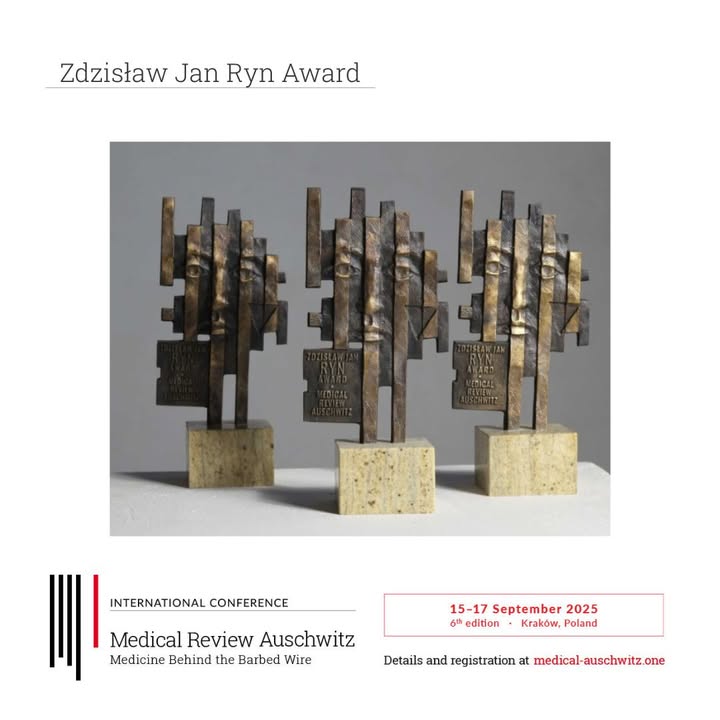
🏅 The Award commemorating Professor Zdzisław Jan Ryn, MD, PhD will once again be presented. Professor Ryn—a distinguished psychiatrist, diplomat, and humanitarian—was the initiator and expert consultant of the Medical Review Auschwitz project. His legacy remains a guiding force in our exploration of medicine, ethics, and historical memory.
The Award is a statuette designed and made by Karol Gąsienica Szostak, an eminent Polish sculptor.
The Award is conferred annually in two categories:
• For exceptional contribution to the Medical Review Auschwitz project, selected by the Organizer.
• For the best lecture delivered during the conference, chosen by a jury announced at the opening session.
The Award Ceremony will take place at the conclusion of the conference.
We now await, with great anticipation, to see who will be honored this year for their outstanding contributions to the dialogue between medicine, ethics, and memory.
More information about the statuette and sculptor: mra.piebm.org/conference/zdzislaw-jan-ryn-award
Check the full program at: www.medical-auschwitz.one/program2025
Register at medical-auschwitz.one/conference/registration
#MedicalReviewAuschwitz #MedicalEthics #MRA #HolocaustEducation #RynAward
Medical Review Auschwitz is attending an event.
We’re proud to announce that the Muzeum Krakowa Historical Museum of the City of Kraków is now an official partner of the 6th international conference Medical Review Auschwitz: Medicine Behind the Barbed Wire.
🏛️ Established as an independent institution in 1945, the museum has played a vital role in preserving Kraków’s heritage. Its main home, the baroque Krzysztofory Palace, stands as a cultural landmark in the heart of the city.
One of its most impactful branches, Fabryka Schindlera / Muzeum Krakowa Oskar Schindler’s Enamel Factory, located in Zabłocie, offers a powerful exhibition that explores Kraków under Nazi occupation. Visitors journey through the stories of everyday citizens, the Jewish community, life in the ghetto, and the harrowing reality of the KL Plaszow concentration camp.
As part of the Scholarship Program, participants will have the unique opportunity to visit Schindler’s Factory and engage directly with this history.
It’s a chance to reflect, learn, and deepen understanding of the human stories behind the Holocaust and Kraków’s wartime experience.
This partnership underscores a shared mission: to educate, commemorate, and ensure that these stories are never forgotten.
#MedicalReviewAuschwitz #muzeumkrakowa #MedicalEthics #MRA #HolocaustEducation
Medical Review Auschwitz
“I believe that anyone who wants to be a physician should take part in our conference at least once in their life.” — Prof. Piotr Gajewski, Head of the Polish Institute for Evidence Based Medicine
We invite you to watch a short film featuring Prof. Gajewski who shares why Medical Review Auschwitz: Medicine Behind the Barbed Wire is not just a conference—it’s a moral imperative.
Since its first edition in 2018, this gathering has brought together medical professionals, students, historians, and ethicists to confront the legacy of medicine practiced within the walls of Auschwitz. It’s a space where science meets conscience, and where the lessons of history challenge us to uphold the dignity of every patient, every life.
This is not about the past alone. It’s about the future of medicine—about shaping physicians who understand that technical skill must be matched by ethical clarity.
📌 Registration for the 2025 edition is still open. We encourage all those in the medical and academic communities to join us for this important event.
🔗 medical-auschwitz.one/conference/registration
#MedicalReviewAuschwitz #MedicalEthics #MRA #HolocaustEducation
Medical Review Auschwitz is attending an event.
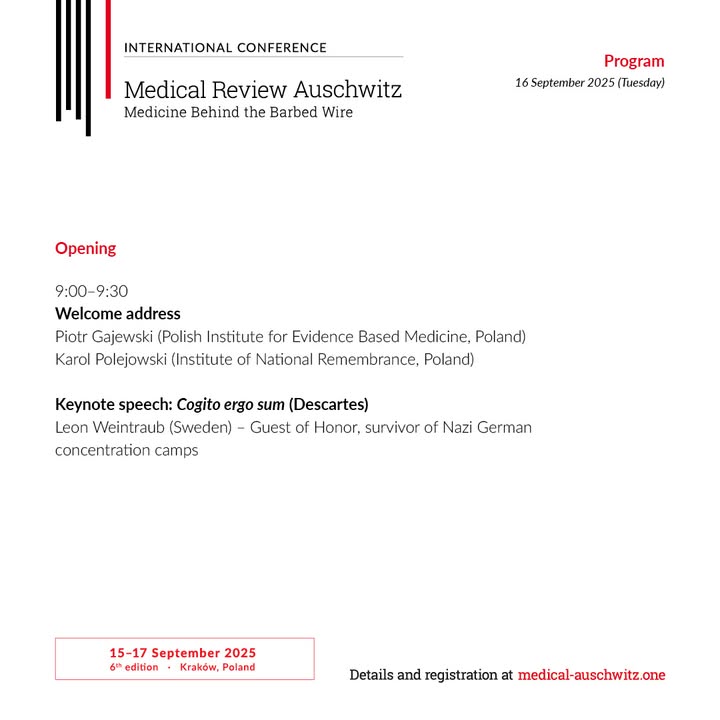
All speakers for the upcoming 6th international conference Medical Review Auschwitz: Medicine Behind the Barbed Wire have already been announced, and we’re pleased to share the full program once again as a reminder for participants and those still considering attending.
The day will begin with welcome remarks from head of the Polish Institute for Evidence Based Medicine and the Institute of National Remembrance, followed by a keynote address from Leon Weintraub (Sweden)—Holocaust survivor and Guest of Honor.
The program is structured around three thematic sessions, each exploring different aspects of medical ethics, historical responsibility, and professional conduct:
•The involvement of physicians in Nazi-era euthanasia and sterilization campaigns
•The ethical legacy of Nazi medical crimes and the development of international standards
•Contemporary challenges in teaching ethics and confronting historical injustice
Each session will conclude with a panel discussion, offering space for reflection and exchange.
📌 Registration is still open, and we encourage those who haven’t yet registered to do so
🔗medical-auschwitz.one/conference/registration
#MedicalReviewAuschwitz #MedicalEthics #MRA #HolocaustEducation
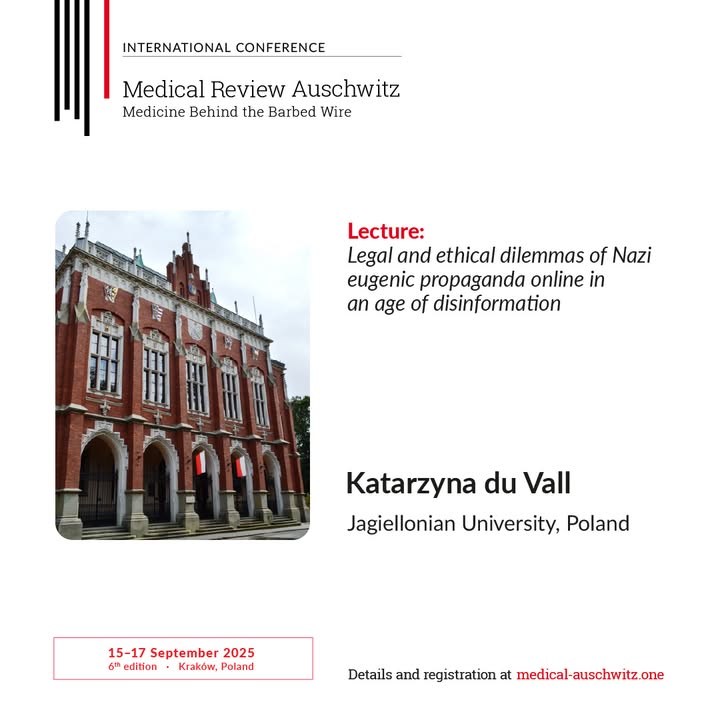
Medical Review Auschwitz
Meet Katarzyna du Vall – PhD in legal sciences, a graduate of law at the Faculty of Law and Administration of the Jagiellonian University and of political science at the Faculty of International and Political Studies of the Jagiellonian University. She completed her legal counsel training.
Assistant Professor at the Jagiellonian University (INPiSM UJ) and lecturer at the @collegium.medicum.uj Jagiellonian University Medical College, where she has been teaching the subject ‘Medicine of the Third Reich’ for medical and dental students for over 10 years.
🌐Check the full program at: www.medical-auschwitz.one/program2025
✅Register at medical-auschwitz.one/conference/registration
#MedicalReviewAuschwitz #MedicalEthics #MRA #HolocaustEducation
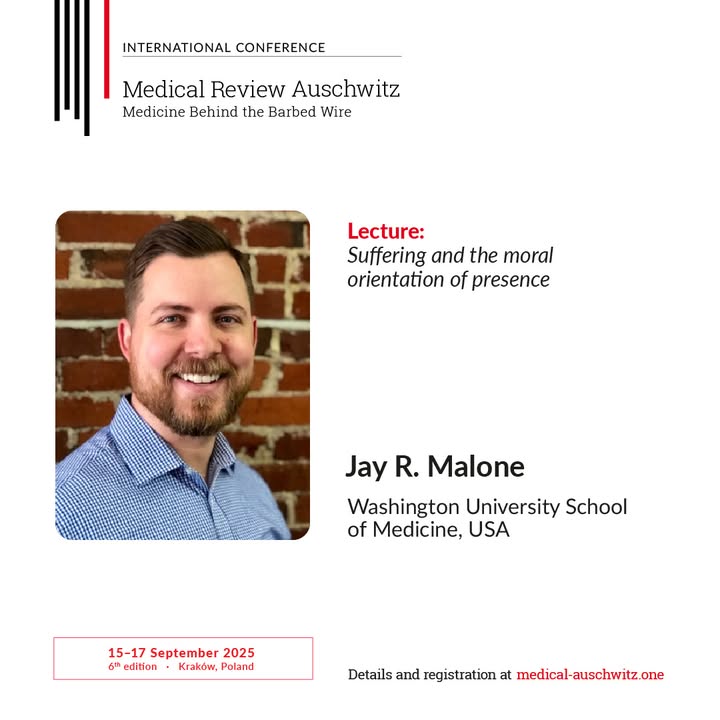
Medical Review Auschwitz
Meet Jay R. Malone, MD, PhD a pediatric critical care physician and clinical ethicist at St. Louis Children’s Hospital and Washington University School of Medicine, where he is currently the Medical Director of Ethics and chair of the medical ethics committee.
He received his Ph.D. in Health Care Ethics at St. Louis University. His dissertation focused on the impact of invasive medical technologies on the suffering of children and families.
Dr. Malone’s ongoing research focuses on the role of suffering in pediatric critical illness, and the impact of emotion on family communication around the dying process. He is also a medical faculty member with the FASPE – Fellowships for the Study of Professional Ethics
🌐Check the full program at: www.medical-auschwitz.one/program2025
✅Register at medical-auschwitz.one/conference/registration
#MedicalReviewAuschwitz #MedicalEthics #MRA #HolocaustEducation
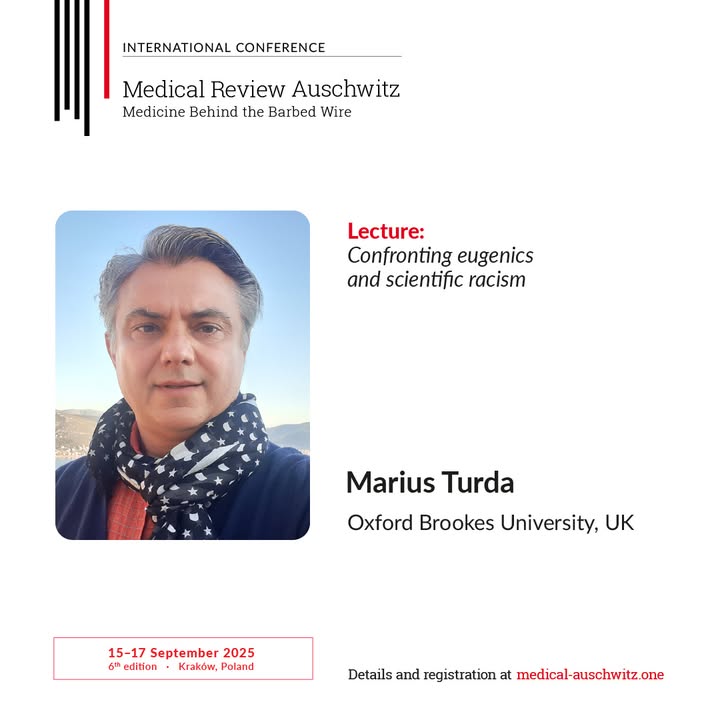
Medical Review Auschwitz
MeetMarius Turda, Fellow of the Royal Historical Society, Professor and Director of the Centre for Medical Humanities at Oxford Brookes University, having previously taught at UCL and University of Oxford.
He has authored, co-authored and edited more than 20 books on the history of eugenics, race, and racism in East-Central Europe and beyond, including Bloomsbury’s A Cultural History of Race published in 6 volumes in 2021 (paperback 2025).
His latest book is In Search of the Perfect Romanian: National Specificity, Racial Degeneration and Social Selection in Modern Romania (2024; illustrated ed. 2025; Eng. ed. forthcoming 2026).
He has also curated four exhibitions on eugenics, racial anthropology and biopolitics, most notably the one entitled 'We are not Alone': Legacies of Eugenics. His most recent public engagement project is www.confront-eugenics.org
🌐Check the full program at: www.medical-auschwitz.one/program2025
✅Register at medical-auschwitz.one/conference/registration
#MedicalReviewAuschwitz #MedicalEthics #MRA #HolocaustEducation
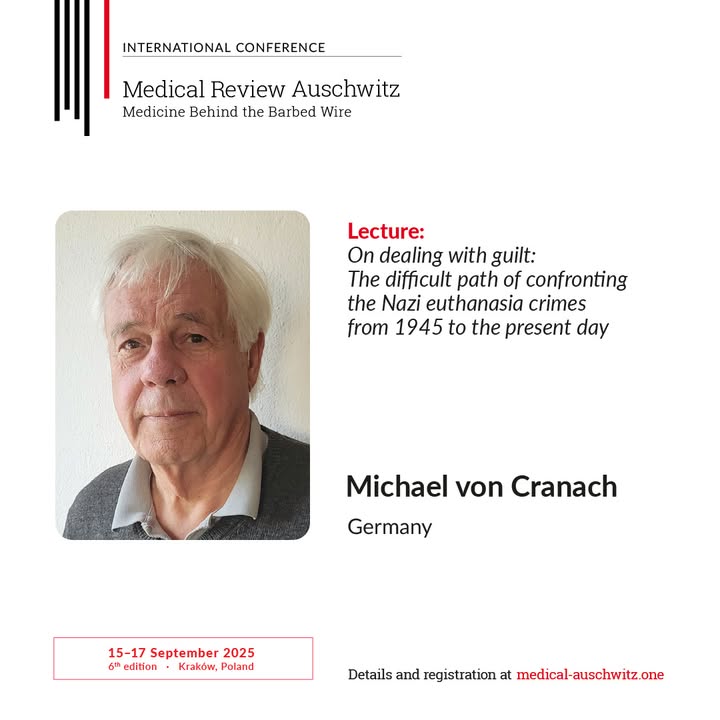
Medical Review Auschwitz
Meet Michael von Cranach – honorary Professor, Hochschule München Psychiatrist and Psychotherapist.
Born in 1941, Prof. von Cranach received his early education in Madrid, Spain, then he study medicine at the University of Bonn (1959–1965). He was awarded a British Council Scholarship to the Institute of Psychiatry in London (1968–1969), deepening his expertise in psychiatric research and practice.
From 1970 to 1980, he served at the Psychiatric Clinic of the University of Munich, followed by a distinguished tenure as Director of the Bezirkskrankenhaus Kaufbeuren (1980–2006). Since 2006, he has maintained a psychiatric practice in Munich.
Prof. von Cranach is an active member of the working group “Psychiatrie und Fürsorge im Nationalsozialismus” and the “Gedenkinitiative München”, contributing to historical and ethical discourse in psychiatry.
His research and publications focus on:
Diagnostic processes in psychiatry
Social psychiatry, including reform and service evaluation
Ethics in psychiatric practice
Psychiatry during National Socialism
🌐Check the full program at: www.medical-auschwitz.one/program2025
✅Register at medical-auschwitz.one/conference/registration
#MedicalReviewAuschwitz #MedicalEthics #MRA #HolocaustEducation
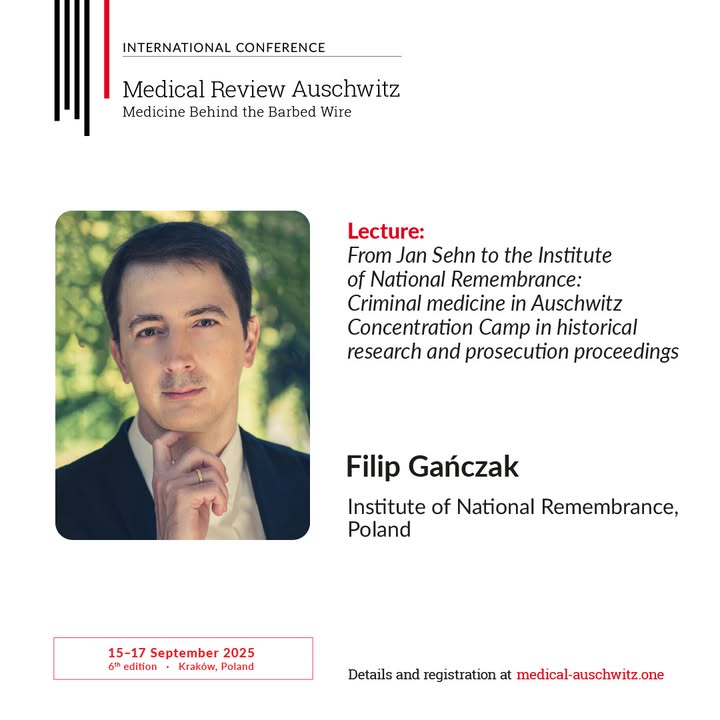
Medical Review Auschwitz
Meet Filip Gańczak (born 1981) holds a PhD in political science. He is an employee of the Instytut Pamięci Narodowej Institute of National Remembrance in Warsaw and editor of the Institute of National Remembrance Review. Major publications: »Polen geben wir nicht preis« Der Kampf der DDR-Führung gegen die Solidarność 1980/81 (Paderborn 2020), Jan Sehn und die Ahndung der Verbrechen von Auschwitz. Eine Biografie (Göttingen 2022, Chinese edition Beijing 2024). Winner of the Witold Pilecki International Book Award (2021).
(fot. Magda Varda)
🌐Check the full program at: www.medical-auschwitz.one/program2025
✅Register at medical-auschwitz.one/conference/registration
#MedicalReviewAuschwitz #MedicalEthics #MRA #HolocaustEducation #IPN
Medical Review Auschwitz updated their status.
When this happens, it’s usually because the owner only shared it with a small group of people, changed who can see it or it’s been deleted.
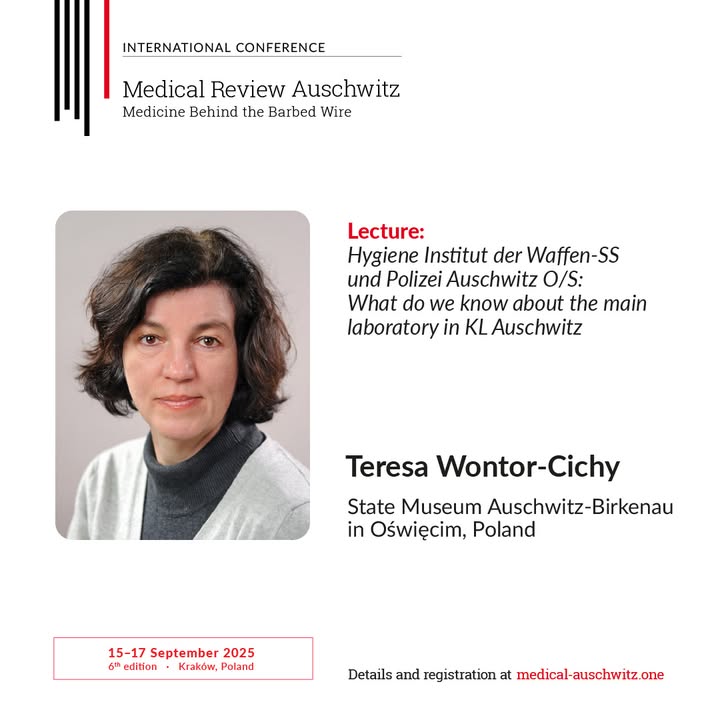
Medical Review Auschwitz
Meet Teresa Wontor-Cichy – historian, Ph.D., in the Research Centre of the State Museum Auschwitz-Birkenau in Oświęcim. She started working at Auschwitz Memorial / Muzeum Auschwitz after receiving a Master’s degree in History from the Catholic University of Lublin, Poland in 1993. Her thesis topic was on social welfare in 16th-century Poland.
Her professional research is focused on Auschwitz and the Holocaust. She is the author of several historical books exploring the experiences of different prisoner groups, such as: Imprisoned for Their Faith. Jehovah’s Witnesses in KL Auschwitz and Duchowieństwo i życie religijne w Auschwitz (Clergy and Religious Practices in Auschwitz, published in Polish), Saint Maximillian Maria Kolbe. She is also an author of and historical consultant on numerous biographies published in German and Polish, including: Wilhelm Brasse’s Fotograf 3444: Auschwitz 1940-1945; Maria Anna Potocka’s Zofia Posmysz szrajberka 7566: Auschwitz 1942-1945; Henri Kichka, Byłem więźniem dziesięciu obozów 1940-1945; and, Natali Budzyńska’s Dzieci nie płakały. Historia mojego wuja Alfred Trzebinskiego, lekarza SS. Various works have also been published in English and German.
Teresa Wontor-Cichy has been our lecturer since 2022. Her previous lectures are available in our E-library for your reference: mra.piebm.org/library/filter/authors:teresa-wontor-cichy/
🌐Check the full program at: www.medical-auschwitz.one/program2025
✅Register at medical-auschwitz.one/conference/registration
#MedicalReviewAuschwitz #MedicalEthics #MRA #HolocaustEducation
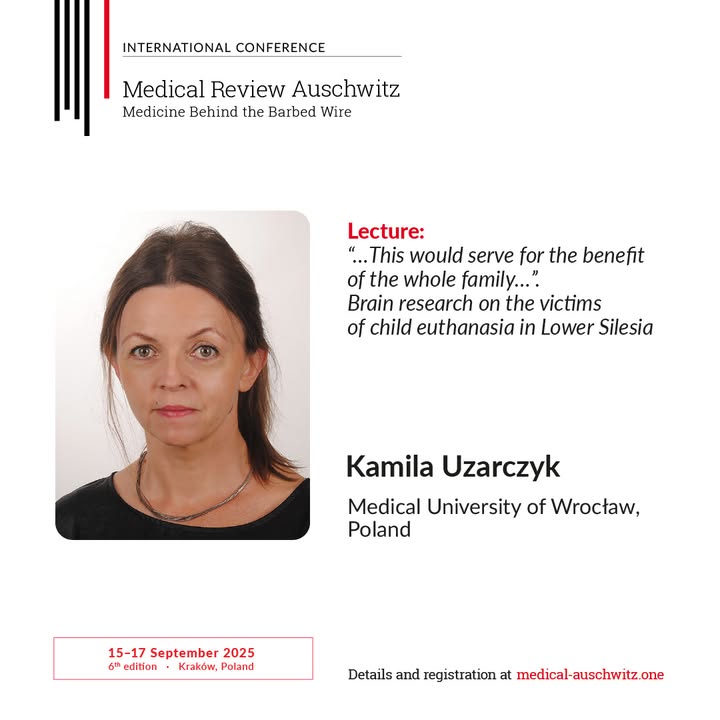
Medical Review Auschwitz
Meet Kamila Uzarczyk – assistant professor in the Department of Medical Humanities and Social Sciences in Medicine at the Medical University of Wrocław, Poland Uniwersytet Medyczny im. Piastów Śląskich we Wrocławiu. She received her PhD from University of Wrocław in 2001 with a dissertation titled The Concpt of Race Hygiene and Implementation of Race Hygiene Legislation in German Province of Silesia (Toruń: Marszałek, 2002).
Research interests include history of social hygiene movement, history of eugenics and implementation of eugenic policies in interwar years, extermination of people with disabilities in the Third Reich, unethical medical experiments and brain research on “euthanasia” victims during WW II. She is a member of The Lancet commission on Medicine, Nazism and the Holocaust: Historical Evidence, Implications for Today, Teaching for Tomorrow.
🌐 Check the full program at: www.medical-auschwitz.one/program2025
✅ Register at medical-auschwitz.one/conference/registration
#MedicalReviewAuschwitz #MedicalEthics #MRA #HolocaustEducation
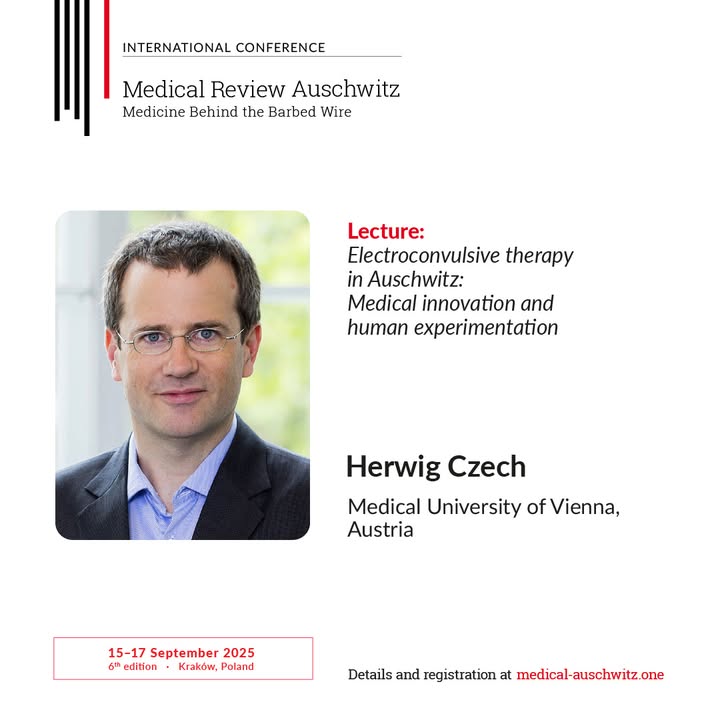
Medical Review Auschwitz
Meet Herwig Czech – professor of history of medicine at the Medical University of Vienna, Institute for Ethics, Collections and History of Medicine (Josephinum). He co-directs the research project “Brain research at institutes of the Kaiser Wilhelm Society in the context of National Socialist crimes,” funded by the Max Planck Society.
He is also co-chair of the Lancet Commission on Nazism, medicine and the Holocaust. His main fields of research are medicine and biopolitics before, during and after National Socialism, with a special focus on the history of eugenics and ‘racial hygiene,’ public health, psychiatry, pediatrics and neuropathology, and the history of Viennese medicine since the late 18th century.
Studied history at the Universities of Graz, Vienna, Paris VII and Duke. Gedenkdienst (voluntary civil service) at the Centre de Documentation Juive Contemporaine in Paris. 2007 PhD from Vienna University with a thesis on Medicine in National Socialist Vienna. Teaching assignments at the Universities of Newcastle, Wroclaw and Vienna. 2004 to 2011 and 2014 to 2017 research fellow at the Documentation Centre of the Austrian Resistance, 2011 to 2014 recipient of an APART-Fellowship of the Austrian Academy of Sciences. 2019 visiting fellow at the Institute for the History of Medicine and Ethics in Medicine at Charité – University Medicine Berlin.
🌐 Check the full program at: www.medical-auschwitz.one/program2025
✅ Register at medical-auschwitz.one/conference/registration
#MedicalReviewAuschwitz #MedicalEthics #MRA #HolocaustEducation
Medical Review Auschwitz
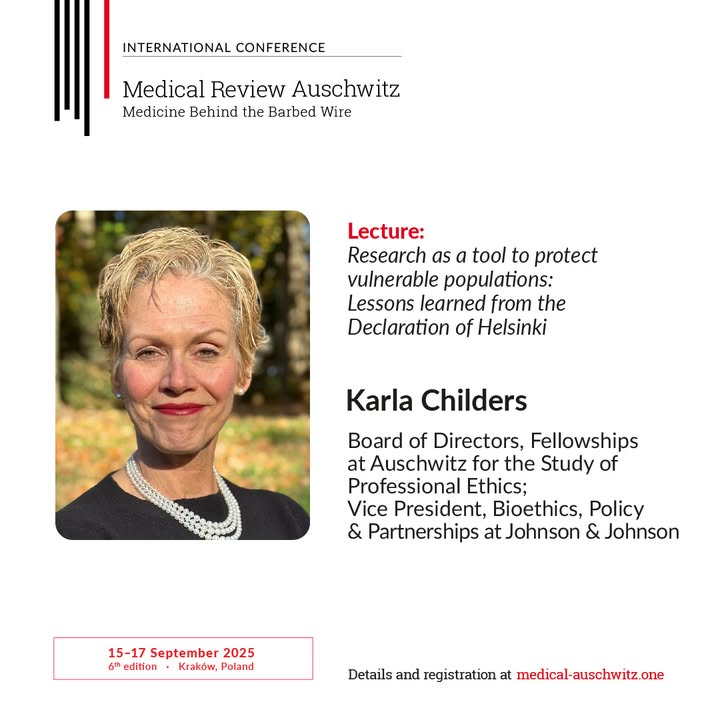
Meet Karla Childers joined Johnson & Johnson (J&J) in October 2013 in the Office of the Chief Medical Officer where her primary responsibility has been leading and coordinating various ethics-based, science and technology policy projects.
In her current role, Ms. Childers leads enterprise bioethics and bioethics-based R&D policy, public/private partnerships and external engagement for the Office of the Chief Medical Officer (OCMO), including development of bioethics-based R&D policies and driving internal and external thought leadership in the field of bioethics and policy.
Ms. Childers is the Chair of the J&J Bioethics Committee, which serves as an internal forum providing advice on bioethical questions within J&J. She is responsible for the management and conduct of that committee and relevant bioethics consultations. She serves as a bioethics subject matter expert for various internal and external science and technology policy work and coordinates the internal bioethics educational program sponsored by the Office of the Chief Medical Officer.
She received her Bachelor of Arts Degree in Chemistry from Purdue University (IUPUI-Indianapolis Campus) and a Master of Science in Jurisprudence with a concentration in Health Law from Seton Hall Law School. She is also a graduate of Columbia University with a Master of Science in Bioethics. When not working, she enjoys cooking for friends and family and spending time outdoors with her husband, Andy, and two dogs, Jo Jo and Kelsey.
🌐 Check the full program at: www.medical-auschwitz.one/program2025
✅ Register at medical-auschwitz.one/conference/registration
#MedicalReviewAuschwitz #MedicalEthics #MRA #HolocaustEducation