
We invite you to the 2026 edition of the Medical Review Auschwitz Conference: Medicine Behind the Barbed Wire. Registration is open now!
6–8 October 2026 · Kraków, Poland
Aspects of the Psychopathology of the Übermenschen: Notes and Marginalia in the Autobiography of Rudolf Höss
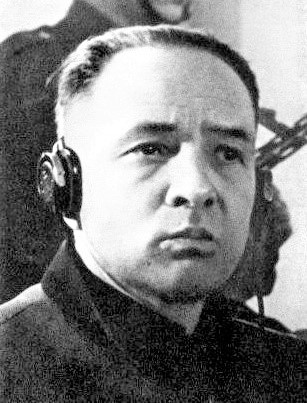
“Rudolf Höss,” says Stanisław Batawia in his 1951 article1 about the commandant of Auschwitz, “was neither a madman affected by moral insanity nor an affectionless psychopath, nor a person who had ever manifested any criminal or sadist proclivities. He was an individual of absolutely mediocre intelligence who, from his early childhood, due to the impact of his milieu, had a tendency to view events rather uncritically and be easily directed by any authority; we come across such people very frequently.”
In his introduction to the commandant’s memoirs published in Warsaw in 1960,2 Dr. Jan Sehn is right to underline that “facts and dates from Höss’s life are characteristic not only of this particular individual. Even the stages of his biography are representative of the lives of large groups of Germans that belong to his generation.”3
Höss’s autobiography,4 which he begins in quite elevated terms as “My Psyche, Growing Up, Life, and Experiences,”5 provokes conflicting emotions in the reader; yet the prevailing feelings seem to be disdain mixed with disgust.
Martin Brosztat, the German editor of Höss’s writings, references Dr. [Gustave Mark – MK] Gilbert, to talk about “those odd, but characteristic traits of Höss that become even more manifest in his autobiography: the eager conscientiousness of a man who always only serves some authority, who always does his duty, as executioner as well as confessing delinquent, who continues to live only vicariously, who has always renounced his own self and therefore also willingly submits his own self, and a frighteningly empty self, to the court in the form of an autobiography so as to serve the cause.”6
Höss’s childhood was depressingly cold and colorless. His family upheld a long tradition of army service, his father was a major in the German colonial forces in Africa. Described by Rudolf as fanatically Catholic, he gave his son a restrictive upbringing. “Even from childhood on up, I was trained in a complete awareness of duty. Attention to duty was greatly respected in my parent’s home, so that all orders would be performed exactly and conscientiously … My father paid special attention to see that I obeyed all his orders and instructions, which were to be carried out painfully … He repeated over and over that from little things which seemed unimportant carelessness generally develops into great tragedy.”7
This attitude, instilled in him by his father, stayed with Höss until the end of his life. Even in Auschwitz, as we can infer from his own account, he was inconvenienced not so much by the smell of dead bodies being burnt as by instances of administrative dereliction. He welcomed the introduction of Cyclone B with enthusiasm, as now the annihilation of millions of Jews8 would become more efficient. He was concerned when he was told to put to work some of them: they would die within a few weeks anyhow, so it was more efficient to send them to the gas straightaway.
One could conclude that in Auschwitz, as well as in other places where he served, he was so busy avoiding “little things which seemed unimportant” that he almost ignored the furnaces of the crematoria.
While Höss gives a fairly vivid sketch of his father, his mother’s figure remains completely hazy. Höss remembers only one thing: “My mother tried everything to tear me away from this obsessive love of animals, but it was completely useless because I didn’t pay any attention to her. She thought it was too dangerous.”9
The relations between Höss’ parents were respectful and he says that “it was very seldom that they exchanged an angry or bad word between them.”10 Yet, at the same time they must have been distant as he admits, “I never saw them being affectionate to one another.”11 He describes himself as affectionless: “I refused any open show of affection, even from my early years on, much to the constant regret of my mother and all of my aunts and relatives. A handshake and a few brief words of thanks were the most that one could expect from me.”12 He did not like his sisters, who were four and six years his juniors, even though they made an effort to be kind to him. He could be so mean to them that, reduced to tears, they went running to their mother.
Höss lived in an emotional vacuum. “I respected and admired my parents very much, my father as well as my mother. However, love, the kind of love which I came to know later as a parent, I could not pretend to show for them.”13 As a fourteen-year-old boy, he met his father’s death with indifference and was similarly unmoved by the passing away of his mother: he had just turned sixteen and was about to be sent to the front.
This coldness and impassivity can be felt on every page of his memoirs, they paint it gray, and make the reading tedious. The only vivid passages are descriptions of his first clashes with the enemy in 1917, on the Iraqi front and of Höss’s captain, his “soldier father.” Höss, who was seventeen at the time says, “It was a much more intimate relationship than I had with my own father. The captain always kept me in his sight. Even though he never let me get away with anything, he always liked me and worried about me as if I were his son.”14 In the same year, in a hospital in Palestine, Höss found his first love, which he discusses rather briefly: “Her tender caresses, the way she propped me up and held me, confused me at first, because I had always avoided showing affection, but now I was under the magic spell of love.”15 Finally, the book presents his farewell letters to his wife and children, written in a Polish jail.
As a child, Höss did not have any peers to play with: “I had no playmates at all, because all the children in the neighborhood were older, so my social life depended on adults.”15 His friends then were animals, especially his favorite pony. “The only one I confided in was my Hans. He understood me, as far as I was concerned.”16 Höss admits, “I enjoyed playing by myself or finding things to do alone. I didn’t like it when others tried to join in and I didn’t like being watched by anybody. I was and would always be a loner.”17
It is possible that Höss had certain anankastic traits: “I had to constantly wash and bathe. I would take any opportunity to wash or bathe in a tub or stream that flowed through our garden. I ruined a lot of toys and clothes by doing this.”18 This appreciation of cleanliness stayed with him until the end of his life; in the camp, it appears, what irritated him most of all was the filth and mess.
His entire life proved too short for him to develop a proper attitude toward other people. He always “stood at attention,” either taking orders from his superiors or giving them to his subalterns. Höss could never form a relationship on the same plane, as equal to equal. He was even incapable of behaving like a human being to another human being.
His world knew only leaders, soldiers, enemies, and prisoners. It was a world of cogs in the machine, of robots, not people. It had no place for feelings and one’s own judgment; everything that it held had to be premeditated, calculated, precise, scientific, straightforward.
In his farewell letter [to his children], Höss addresses his eldest son Klaus, “The biggest mistake of my life was that I believed everything faithfully which came from the top, and I didn’t dare to have the least bit of doubt about the truth of that which was presented to me … Walk through life with your eyes open. Don’t become one-sided; examine the pros and cons in all matters. In all your undertakings, don’t just let your mind speak, but listen above all to the voice in your heart … Become a person who lets himself be guided primarily by warmth and humanity.”19
In the final letter to his wife, Höss says, “What humanity is, I have only come to know since I have been in Polish prisons. Although I have inflicted so much destruction and sorrow upon the Polish people as Kommandant of Auschwitz, even though I did not do it personally, or by my own free will, they still showed such human understanding, not only by the higher officials, but also by the common guards, that it often puts me to shame.”20
Perhaps when writing that, Höss still had a slight hope that he could buy his pardon with cheap flattery. Yet anyway, this sudden revelation that he had just before his death gives one pause: he discovered the existence of something that is termed “humanity.”
One more thing should be noted, namely his expression, “even though I did not do it personally, or by my own free will.” Although Höss took responsibility for what had been going on at Auschwitz, and said so before the Polish court, his sense of being accountable grew out of his strict adherence to the camp regulations, which said that the “camp Kommandant is responsible for the entire camp in every way.”21
Höss knew those rules all too well and held himself liable for the camp’s operations, because that was stipulated by the regulations. But he did not feel guilty. Deep down in his heart, in all probability, he must have felt innocent: after all, everything he had done had been done in the line of duty.
“I did not do it personally or of my own accord,” these words must have been said by practically all the war criminals. In a sense, they were right, because in a totalitarian system an individual cannot act on personal motives or on their own initiative. The system prevents the individual from developing a sense of responsibility, which is an important component in a mature personality. The system thwarts personal growth and instead builds its strength on callowness and moral dwarfishness: people with such traits are the best at listening to orders and obeying them, because the only thing they respect is authority.
“Without realizing it,” says Höss in the final letter to his wife, “I had become a cog in the terrible German extermination machine … It is tragic that, although I was by nature gentle, good-natured, and very helpful, I became the greatest destroyer of human beings who carried out every order to exterminate people no matter what. The goal of the many years of rigid SS training was to make each SS soldier a tool without its own will who would carry out blindly all of Himmler’s plans. That is the reason why I also became a blind, obedient robot who carried out every order.”22
This quotation contains the expression “to carry out orders blindly.” As we all know, a common turn of phrase often hides great wisdom of many generations. “To carry out orders blindly” means to be totally focused on achieving one’s goal, to follow orders just as a robot or an electronic device would do, having been programmed that way. No free choice is possible then, because such a person cannot see anything besides the goal of fulfilling orders, cannot see the other side of the coin, cannot see anything alongside the road that leads straight to the goal.
In his memoirs, Höss often defends himself, saying that he was unaware of a large proportion of all the horrors that went on in Auschwitz, that he had not witnessed them. He pins the blame on his subordinates, who did not abide by the camp rules and did not obey his orders. In the farewell letter to his wife, he says, “Most of the terrible and horrible things that took place there I learned only during this investigation and during the trial itself.”23 Every reader can see that such an explanation is an extremely naïve lie. However, it is not a lie that results from self-defense. Human robots, indeed, cannot see very many things, because their goal entirely fills their field of vision. They lose the ability to look at a thing from many points of view, but instead view it from one perspective only.
For them, a stick is just an instrument of physical punishment; it cannot be a blind man’s support, or a dog’s fetching toy, a measuring standard, a dead branch, a child’s imaginary hobby-horse to be straddled. The essence of play, not only for humans but also many animals, is exactly the ability to look at things in many different ways. For an observing cat, a moving finger can be a mouse that should be caught, a signal of imminent punishment, or a part of a stroking hand. For a little girl, a waste piece of cloth may become her dolly, a rag ball, a strip of elegant fabric to fashion a dress for her doll, or many other objects in her wonderland.
Play always involves humor which stems from the fact that suddenly we view things differently than we used to. Adults may start behaving like children, children mimic adults, a respectable gentleman turns into a horse and moves on all fours: any moment of play can bring several surprises.
Little Rudolf had no playmates, and even though he had a pony, his fairy-tale land of magic and adventure could only have been built together with peers; his parents could not conjure it up, either. He kept washing away some imaginary dirt, perhaps of his stifled aggression. Of course, this is mere speculation: the biographical details documenting Höss’s childhood are too scant to explicate his nearly obsessive partiality to cleanliness. Anyway, many children spend their youngest years just as he did, in a dry and cold milieu which allows no room for play, imagination, and tenderness. Such children are unhappy, but they often grow into men of worth.
Höss’s lackluster childhood left its imprint on his entire life. This man was probably never able to enjoy himself or to joke, and had no sense of humor; his life was filled with just carrying out orders. He took everything seriously, even the tragicomic slogan that he had put up over the main gateway into the camp. His lack of a sense of humor was also a product of his narrow horizons; he got lost in details and was incapable of comprehending a problem as a whole.
He executed all orders eagerly, was a good student and a brave soldier in the Iraqi campaign, as well as an exemplary prisoner in 1923–28, when he served time for being an accomplice in a fatal beating attack in the early 1920s. This is how Höss describes his imprisonment: “From childhood on I was taught to be absolutely obedient to the point of the most painstaking neatness and cleanliness, so it was not difficult to fit into the hard life of prison, as far as the prison officials were concerned. I conscientiously performed my duties and did the work I was asked to do—most of the time more—much to the satisfaction of the foreman.”24
However, in the third year of his sentence, Höss had a nervous breakdown: “After two years had gone by without anything special happening, suddenly a strange condition came over me. I became very irritable, nervous, and excited. I couldn’t stand doing any work. I was a tailor at the time, and I had enjoyed it. However, I was unable to eat. Every bite I forced down my throat came back up again. I couldn’t read anything anymore and I couldn’t concentrate at all. Like a wild animal I paced rapidly back and forth in my cell. I couldn’t sleep anymore. Up until then, I always slept deeply and almost dreamlessly through the whole night. But now I had to jet up and pace back and forth without finding any rest. When I finally did drop on my bed, because I was exhausted, and fell asleep, I would awake after a short time out of a confused nightmare bathed in sweat. In these nightmares, I was constantly persecuted, beaten, or shot to death, or I was plunging into a deep abyss. Those nights became torture to me. Hour after hour, I heard the tower clock strike. The closer the morning approached, the more I dreaded the coming day and the people I would have to see again, and I wished I wouldn’t see anyone anymore. With all my power I tried to pull myself together, but I just couldn’t fight it. I wanted to pray, but all I could manage was a sad, fearful mumbling. I had forgotten how to pray; I could no longer find the way to God. In that state of mind I believed that God didn’t want to help me anymore because I had left him. My officially leaving the Church in 1922 tortured me. And yet, this was only the result of a condition which existed since the end of the war. Even though it happened gradually, I had already cut the ties to the Church during the last years of the war. I reproached myself bitterly for not having followed the will of my parents, for not becoming a priest. It was strange how all of that tortured me. My mental agitation grew from day to day, in fact hour to hour. I was close to going raving mad. Physically, I was deteriorating more and more. My foreman noticed my absentmindedness, which I had never shown; I did even the simplest things wrong. And although I worked like a dog, I just couldn’t complete my quota.”25
Höss was diagnosed with prison psychosis. After a few days in the hospital, he recuperated. It was the most serious mental crisis in his life, much more acute than the one he experienced later on, toward the end of his service as commandant of Auschwitz.
Höss was also a model prisoner in the Polish jail. Dr. Sehn says, “He wrote also on his own initiative, having noticed that some sidelined issue had been of interest to the interrogator.”26 This desire to complete the task in a perfect way was quite typical of Höss. He seemed eager to honor the wishes of his superiors before they were made known, regardless of who the superior was, even when he was a Pole.
When he received Himmler’s order to expand the camp’s area, he was ready and willing to start: “Right from the beginning I was completely absorbed by my new assignment and my orders; in fact, I was obsessed. Every new problem that appeared lashed me on to even greater intensity. I didn’t want this situation to get the best of me. My ambition would not permit it. I lived only for my work.”27
As one can infer from his recollections, in Auschwitz Höss was troubled by a disorder that today would be called management neurosis. “More and more I was withdrawing into myself. I buried myself in my work and became unapproachable and visibly hardened. My family suffered because of it, particularly my wife, because I was unbearable to live with. I saw only my work, my duty. All human feelings were pushed aside by this … I would have loved to run off and be alone because I suddenly felt that I didn’t want to be among other people any longer.”28 He found a remedy―the world’s oldest neuroleptic. He said, “In general, alcohol put me into a happy mood, and I wished the whole world well.”29
However, the source of the problem was not the mass extermination of the Jews and people of other nationalities. He hailed the successful experiments with Cyclone B with joy. “Now I was at ease. We were all saved from these bloodbaths, and the victims would be spared until the last moment.”30 He wrote the following about the atrocities of the camp: “I saw everything clearly, often too clearly, but I could not allow feelings to overcome me. I could not allow any emotion to stand in the way. Winning the war was the final goal; the rest didn’t matter.”31 Visibly, Höss kept a hard-line stance on mass extermination, of which he was a chief perpetrator, and he harbored no doubt as to whether his stance was correct: the final goal of winning the war prevailed.
He had grown accustomed to the sight of “atrocity” since he turned fourteen and that’s why he habituated to the everyday barbarity of Auschwitz fairly quickly. He was so used to macabre scenes that he did not see them. He did not learn of them, he says in his memoirs, until his trial.
He wrote kindly words about the Roma and Sinti people; Himmler’s order to annihilate them seemed unpleasant, but orders are orders. “The doctors had the order from Himmler to separate the sick, especially the children [from the other Roma prisoners], without making it noticeable. It was the children who had the most trust in the doctors. Surely nothing is more difficult than to have to go through all this, to be cold, without mercy, and without compassion.”32
He felt no kindness for the Jews, but no hatred, either, as he claimed, “I want to emphasize here that I personally never hated the Jews. I considered them to be the enemy of our nation. However, that was precisely the reason to treat them the same way as the other prisoners. I never made a distinction concerning this. Besides, the feeling of hatred is not in me …”33
He considered the extermination of the Jews his sacred civic duty, because that was the order he had been given by Himmler in the summer of 1941. In a private conversation, the Reichsführer SS said to Höss: “The Führer has ordered the Final Solution of the Jewish question. We the SS have to carry out this order … I had first thought of choosing a higher-ranking SS officer for this job so as to avoid any difficulties with someone who doesn’t have the competence to deal with such a difficult assignment.”34 In this rather simple way Himmler tickled Höss’s ambition. “You now have to carry out this assignment … It is a hard and difficult job which requires your complete commitment, regardless of the difficulties which may arise.”35 So this task was ideal for Höss, because he valued only those jobs that were “hard” and called for “complete commitment;” he was ready to self-sacrifice on the altar of duty. Himmler also admonished Höss: “Not even your superiors are allowed to know about this.”36 This meant that Höss was allowed to know the top secret matters and thanks to this single sentence his status exceeded that of his direct superiors.
The last three sentences produced by Himmler in this conversation explained the purpose of the extermination campaign: “The Jews are the eternal enemies of the German people and must be exterminated. All the Jews within our reach must be annihilated during this war. If we do not succeed in destroying the biological foundation of Jewry now, then one day the Jews will destroy the German people.”
If these three sentences were quoted in a handbook of psychiatry, they could serve as an illustration of paranoid projection. “I hate the Jews” is repressed and replaced by “The Jews hate me” and “The Jews are the eternal enemies of the German people.”37 “I hate you” is transformed into “You hate me,” “You want to destroy me,” and “So, to defend myself, I have to destroy you.” “If we don’t manage to destroy Jewry now, one day the Jews will destroy the German people.”
If this excerpt from Himmler’s conversation with Höss is treated as representative of the mindset and perception that was typical of a proportion of the German nation in the 1930s and 1940s, then according to psychiatric criteria we could speak of mass delusional paranoia.
We have no reason to believe that Höss did not share the opinions of a high-ranking official like the Reichsführer SS. By burning millions of Jews, he probably had a sense of doing his duty and, as we said above, he welcomed the introduction of Cyclone B, because it speeded up the extermination. On the other hand, he was worried when he received orders that some of the Jewish prisoners were to work for the armaments industry: that was out of the ordinary and ruined the “neatness” of the previous arrangements: “Because of Himmler’s increasing insistence about the employment of prisoners in the arms factories, Pohl38 found himself compelled to resort to using Jews who had become unfit for work. The order was given that if the Jews could be made fit and employable within six weeks, they were to be given special care and food. Until then all Jews who had become unable to work were gassed with the next transport or killed by injection if they happened to be in the infirmary … this order was sheer idiocy,”39 Höss grumbles. It was the first occasion when he dared to question an order from his superiors and provided factual arguments to demonstrate its absurdity. His previously unshakeable confidence that the order of a superior authority must be wise was now undermined.
He was likewise disappointed in Himmler, who gave him contradictory orders and was of no help in difficult situations in the camp. Höss gave several examples of Himmler’s volatility and voiced his resentment: “His orders were always changing!”40
Himmler treated the question of penalties just as inconsistently. “One time he complained there was too much corporal punishment. Another time, ‘Discipline in the camps has become very lax, drastic steps must be taken, and there must be harsher punishments.’”41 So Höss was not outraged by the order to exterminate the Jews, perhaps he even felt flattered to be entrusted with such an important mission. Yet he was indignant when the same Reichsführer SS gave him conflicting orders, impracticable orders or orders that interfered with established camp routines and schedules. For then Höss was losing faith in the most sacred of things: his Befehl. Ultimately, Höss’s faith in his superior’s authority was totally lost when, seeing the imminent demise of the Third Reich, Himmler advised him to “fade into army units,”42 and not, as Höss had expected, to commit suicide and die with the world they had been fighting for. The Reichsführer SS seems to have had a significant part in Höss developing symptoms of neurosis.
His other superiors were not at all better. Höss complains, for instance, about Glücks: “This lack of understanding on the part of my superior nearly drove me to despair. I applied all my knowledge and resolve to my job; in fact, I lived for nothing else. Glücks saw it only as a craze or game on my part.”43 This sounds almost like a hardworking schoolboy’s complaint when he failed a test.
Not only were Höss’s superiors a disappointment, so were his subordinates. “I saw myself cheated and disappointed at every step of the way by my so called coworkers … and day after day I was disappointed.”44
It appears, then, that Höss’s concentration camp psychosis was not caused, as one might assume, by a moral conflict over the fact that he had held the position of commandant in a death camp. That job was his honorable duty. The sight of horrible crimes committed there every day did not awake any remorse in him, because he viewed killing people not as an atrocity, but a soldier’s duty to destroy the enemies of the Third Reich. If those enemies were not destroyed, they would bring about the ruin of the German people.
Höss’s sense of guilt, which later gave rise to his neurosis, had an entirely different source, namely his conviction that he had not done his duty as an executioner well enough. This veteran soldier, who since his youngest years had been raised, as he said himself, with a strong awareness of “duty,” found it completely unbearable to realize that he might be perceived as slacking.
Höss wanted to relieve this sense of guilt by shifting its burden to his superiors and subordinates. To reduce its weight, he even dared to criticize his top superior, the Reichsführer SS. But in this way the authority figures were removed from their pedestals, which for a man like Höss is an anxiety-provoking moment: for him, since his childhood days, the question of authority was paramount.
Even though it is hard to believe, the moral conflict underlying Höss’s neurosis stemmed from his sense of inadequacy in doing his duty as an exterminator. The sheer fact of being an exterminator did not arouse any feelings of guilt, maybe it did not reach his consciousness at all, because since his childhood, Höss had been trained to obey his orders to an iota, not to analyze their content.
Neither does it seem likely that Höss developed a neurosis as a result of witnessing the horrors perpetrated in the camp. He was a very young boy of fourteen when he started getting accustomed to the sight of blood and suffering. “I constantly nagged my mother,” says Höss, “to let me volunteer to help at the Red Cross … I saw the seriously wounded as they quietly moaned to themselves. I always crept timidly past those beds. I saw the dying and the dead. A strange feeling shuddered through me, but I can’t describe this accurately anymore.”45This strange feeling that “shuddered” through him at the sight of the dying and the dead may have had sexual undertones and therefore became suppressed in his memory, but we have no evidence of that. Anyway, emotions with traces of sadism are not that infrequent in children. Yet in Höss’s autobiography one can find neither overt nor even covert proof of sadism, as Prof. Batawia emphasizes.
The right school of life for the future commandant of Auschwitz was his service in the Free Corps between the age of 19 and 23. This is how he describes it: “The battles in the Baltic States were more brutal and vicious than anything I had experienced before, during World War I, or afterwards in all of the battles of the Free Corps … Wherever the opposing forces collided, there was a slaughter until no one was left … Countless times I saw the horrible pictures of the burned-out cottages, the scorched and partially burned bodies of women and children.”46
He received a good schooling also in the secret vigilante courts that functioned within the Free Corps. “Since the government had to deny the existence of the Free Corps, it could not prosecute or investigate crimes such as theft of arms, espionage or treason committed by the members of these organizations. A kind of self-justice system based on historical German patterns came into existence within the Free Corps and their offspring organizations. These were the so-called Vehmic courts. Any kind of betrayal was punished by death. And so many traitors were executed.”47 That was where Höss was trained for his future position as judge and executioner in the same person.
Later he received his formal training in Dachau concentration camp (1934–1938). Höss stated that he had been taught there that even the slightest show of compassion to the enemies of the state “would show the ENEMIES OF THE STATE a weakness which they would immediately take advantage of. Any compassion at all toward the ENEMIES OF THE STATE would be unworthy of an SS soldier. There was no place for weaklings in his ranks [i.e. Eicke’s ranks, as it is his words that Höss is quoting here – MK] and they would be well-advised to disappear into a monastery as quickly as possible. [Eicke] said he could use only hard and determined men who would obey every order, no matter what the cost to themselves. They were not wearing the skull insignia and carrying a weapon for nothing. Eicke said that the SS were the only soldiers in peacetime facing the enemy day and night: the enemy behind the barbed wire.”48 In this way the tasks of a camp guard and executioner were given the status of a front-line soldier’s service.
But even Höss was deeply affected by the punishment of flogging when he witnessed it for the first time: “I remember precisely the first flogging I ever witnessed … I stood in the front rank and I was, therefore, forced to watch the entire procedure in detail. I say forced because if I would have stood further back, I would not have looked. Hot and cold chills ran through me when the screaming started. In fact the whole procedure, even the first beating made me shiver.”49 [Höss describes how the punishment was meted out to two prisoners – MK]. He was having doubts whether he was fit for prison duty. He wrote, “This is when my guilt really begins. It had become clear to me that I was not suited for this kind of service because in my heart I did not agree with the conditions and the practices of the concentration camp as demanded by Eicke. My heart was tied to the prisoners because I had suffered their kind of life much too long and had also experienced their needs … So I fought between my inner conviction and my sense of duty. And I struggled with my loyalty oath of the SS and my allegiance to Hitler. Should I become a deserter?”50
That was how, gradually, since his young days, Höss was prepared for the position of commandant of Auschwitz.
Here we could add a few words about his spiritual life. He was raised in a religious home, perhaps even overly pious. Höss writes, “my father had made a vow that I would lead a religious life and become a priest. The way I was raised was entirely affected by this … My father was a fanatic Catholic … [and] became even more devout as the years passed. As time allowed, he would take me on pilgrimages to the holy places of our country, yes, even to the hermitages in Switzerland and Our Lady of Lourdes in France. He fervently prayed for heaven’s blessing so I would become an inspired priest. I myself believed deeply, as much as one can as a child, and I took my religious duties seriously. I prayed with the proper childish reverence and was zealous as an altar boy.”51
This religious life collapsed when Rudolf was thirteen. His confessor, who was his father’s friend, violated the Seal of Confession by talking to the boy’s father about a school incident in which young Höss had taken part. A further impulse to withdraw from religion and give up the priestly vocation, which was what the father had planned for Rudolf, was the youngster’s stay in Palestine. Höss says, “the trade in holy relics that I had seen in the Holy Land had destroyed my faith in priests.”52 At twenty-two, he officially left the Catholic Church.
He came back to religion only when he was in the Polish jail. In his final letter to his wife, Höss says, “During my long and lonely imprisonment I’ve had enough time on my hands to think exhaustively about my life. I have thoroughly reviewed every aspect of my actions … [T]he entire ideology about the world in which I believed so firmly and unswervingly was based on completely wrong premises and had to absolutely collapse one day. And so my actions in the service of this ideology were completely wrong, even though I faithfully believed the idea was correct. Now it was very logical that strong doubts grew within me, and whether my turning away from my belief in God was based on completely wrong premises. It was a hard struggle. But I have again found my faith in my God. Dearest, I cannot write more about these things. It would just lead to too much.”53
As we know, in an investigation of the etiology of a mental disorder, one of the main directions can be followed: biological, psychological or sociological to name just the most basic ones. Within the biological approach, several subdivisions can be named: genetic, chemical, neurophysiological, pathophysiological etc. Of course, none of these approaches on its own will let us identify the etiology of a particular case, it only makes it possible for us to analyze the case from a selected vantage point.
Similarly, in a discussion of Höss’s prison psychosis, you can find various reasons for it, such as the isolation and monotony of prison life. You could also take a different view: a neurosis or psychosis can be treated as a warning signal that someone’s life is not following its proper course and is going against the laws of human development—just as pain is a signal that the body is in danger. It hardly ever happens that a human being can fully develop all his or her potentialities; some of them remain hidden throughout one’s lifetime and have no chance to emerge. Sometimes, in exceptional situations which require a gigantic effort the true value of a man is revealed. The untapped “energies” come to the surface chaotically and turbulently in the acute phase of psychosis.
However, there are people whose whole life is stunted. They do not get a chance to develop freely and their growth is thwarted, like that of a tree planted in a clay pot. They find their life terrifying due to its boredom, monotony and barrenness. A psychiatrist could say that such people are unable to create their own personality and they live a “second-hand existence,” to put it in Dr. Gilbert’s words. Such was Höss’s life, always led in the shadow of an authority, always repressed and bound by the tight fetters of orders. Perhaps his prison psychosis was a warning that he would not be able to continue this kind of existence. Indeed, after his breakdown, Höss decided to change his previous lifestyle, to settle down, till a piece of land, and start a large family. This sounds idyllic. But soon enough he joined the ranks of the SS.
The warning signal, that is his prison psychosis, did not help. Höss returned to his old ways and unconditional obedience, and once in the SS, trained to become more and more robot-like.
If we were to expand the human typology by adding the robot type, a man whose life is spent in blind obedience and precise execution of orders, who has absolute trust in authorities and is completely deprived of any sense of humor—since humor is a threat to an authority—and who can look at things only from one point of view, because the other points are inaccessible to him, we would also have to say that this type of man has a tendency to compensate for his (perhaps subconscious) sense of inferiority, by his desire to subjugate other people.
Let’s hope that this type of robotic Übermensch perished with the fall of Nazi Germany.
All the notes by M. Kapera
- Batawia’s article was originally published in the bulletin of the Chief Commission for Investigation of Nazi Crimes in Poland, which operated in 1949–1984. In 2005, to commemorate the sixtieth anniversary of the liberation of Auschwitz, his text was reprinted in Archiwum Kryminologii, Vol. XXVII, 2003–2004, pp. 7–41 and digitised. The quotation is to be found on p. 40. The full text in Polish is available at https://czasopisma.inp.pan.pl/index.php/ak/article/view/356/batawia_rudolf_hoess_komendant_K2003-2004A.pdf and its English abstract can be read at https://czasopisma.inp.pan.pl/index.php/ak/article/view/356?articlesBySimilarityPage=1 (both sites accessed June 6, 2026). ↩︎
- It was the second Polish edition of Höss’s autobiography: Hoess, Rudolf. 1960. Wspomnienia Rudolfa Hoessa komendanta obozu oświęcimskiego. Warszawa: Wydawnictwo Prawnicze. (Translated from the German by Jan Sehn and Eugenia Kocwa. With an introduction by Jan Sehn. Edited and footnoted by Jan Sehn.) The first edition appeared in 1956. ↩︎
- Hoess. 1960. Wspomnienia …, 33. ↩︎
- Kępiński and Orwid’s article contains extensive quotes from Höss’s autobiography. This translation relies on its recent English edition (Höss, Rudolph. 1992. Death Dealer: The Memoirs of the SS Kommandant at Auschwitz. ed. by Steven Paskuly, transl. by Andrew Pollinger. New York: Prometheus Books), hence it uses the same spelling of the commandant’s name. Other documents and books use alternative spelling, Rudolf Hoess or Höß. ↩︎
- In the quoted English edition these words (which in German are “Mein Psyche. Werden, Leben und Erleben”) appear only in a footnote on p. 51. In the Polish edition of 1960 referred to by the authors of this article, they are on p. 37. They can be found on the covers of some editions, e.g. https://archive.org/details/kommandantinausc0000hoss/mode/2up
In that German version (Kommandant in Auschwitz. Autobiographische Aufzeichnungen des Rudolf Höß, 1963, München: Deutscher Taschenbuch Verlag), they are on p. 31. ↩︎ - Martin Brosztat’s statement is on page 13 of the abovementioned version, which was based on the first German edition of 1958. ↩︎
- Höss. Death Dealer, 50. ↩︎
- In 1962, when this article was written, the death toll for Auschwitz was estimated at about four million. Research carried out in the 1990s gives an estimate of at least 1.3 million. [TWC] ↩︎
- Höss. Death Dealer, 49. ↩︎
- Ibid., 51 ↩︎
- Ibid. ↩︎
- Ibid., 51. ↩︎
- Ibid. ↩︎
- Ibid., 56. ↩︎
- Ibid., 58. ↩︎
- Ibid., 48. ↩︎
- Ibid., 51. ↩︎
- Ibid., 49. ↩︎
- Ibid. ↩︎
- Ibid., 194. ↩︎
- Ibid., 190. ↩︎
- Ibid., 210. ↩︎
- Ibid., 189. ↩︎
- Ibid. ↩︎
- Ibid., 70. ↩︎
- Ibid., 72. ↩︎
- Hoess, Rudolf. 1960. Wspomnienia … , p. 14. ↩︎
- Höss, Rudolph. 1992. Death Dealer, 122. ↩︎
- Ibid., 123–124. ↩︎
- Ibid., 124. ↩︎
- Ibid., 157. ↩︎
- Ibid., 153. ↩︎
- Ibid., 138. ↩︎
- Ibid., 142. ↩︎
- Ibid., 27. ↩︎
- Ibid. ↩︎
- Ibid., 28. ↩︎
- Ibid. ↩︎
- Oswald Pohl (1892–1951), SS-Obergruppenführer (general) and chief administrator of the German concentration camps. Convicted of war crimes and crimes against humanity, sentenced to death and hanged. ↩︎
- Höss, Rudolph. 1992. Death Dealer, 38. ↩︎
- Ibid., 279. ↩︎
- Ibid. ↩︎
- Ibid., 292. ↩︎
- Ibid., 123. ↩︎
- Ibid. ↩︎
- Ibid., 54. ↩︎
- Ibid., 60. ↩︎
- Ibid., 60–61. ↩︎
- Ibid., 83–84. ↩︎
- Ibid., 82. ↩︎
- Ibid., 95–96. ↩︎
- Ibid., 49–50. ↩︎
- Ibid., 59. ↩︎
- Ibid., 192. ↩︎
How to cite
Copyright notice
Kępiński A., Orwid M., “Aspects of the Psychopathology of the Übermenschen: Notes and Marginalia in the Autobiography of Rudolf Höss”, Kapera M., trans. Originally published as “Z psychopatologii „nadludzi”. Uwagi na marginesie autobiografii Rudolfa Hoessa”, Przegląd Lekarski – Oświęcim, 1962: 83-89.
The Medical Review Auschwitz Project is an international academic forum whose purpose is to share information, scholarship and views on matters related to learning about and from the history of medical involvement in Nazism and the Holocaust. All opinions expressed by any author, speaker or participant are solely his or her opinion and not the opinion of the Project, its organizers or any other participants in the Project.